
Aquapets ( KowloonAquarium)
Red Mini Rasbora (Boraras Naevus)
Red Mini Rasbora (Boraras Naevus)
Couldn't load pickup availability
Tiny, Vivid, and Endlessly Captivating
The Red Mini Rasbora (Boraras naevus), also known as the Strawberry Rasbora, is one of the most jewel-like nano fish available in the hobby. Barely reaching 2 cm in length, this miniature species from peninsular Thailand packs extraordinary colour into a tiny frame — vivid red bodies, a bold black spot on the flank, and a shimmering presence that truly comes alive in a well-planted aquascape.
Best kept in groups, a school of Red Mini Rasboras moving through a planted tank is a sight that never gets old.
Overview
| Attribute | Details |
|---|---|
| Common Name | Red Mini Rasbora, Strawberry Rasbora |
| Scientific Name | Boraras naevus |
| Origin | Peninsular Thailand (Tapi River drainage) |
| Adult Size | 1.3 – 2.0 cm (0.5 – 0.8 in) |
| Lifespan | 3 – 5 years |
| Difficulty | Intermediate — requires stable, soft water |
| Temperament | Peaceful, shy, schooling |
Appearance
Males display a vivid red body with a large, prominent oval black spot just behind the gill plate, and red-black pigment along the dorsal and anal fin edges. Females are slightly larger and rounder with more subdued colouration and a smaller, rounder black spot. Unlike related Boraras species, B. naevus has distinct blotches rather than a continuous lateral stripe — a key identification feature.
Water Parameters & Tank Setup
- Temperature: 20 – 28°C (68 – 82°F)
- pH: 4.5 – 7.0 (soft, acidic water preferred)
- General Hardness (GH): 1 – 8 dGH (very soft to moderately soft)
- Tank Size: 40 L (10 gallons) minimum for a proper school
- Filtration: Gentle flow only — sponge filters ideal; strong currents stress this species
- Schooling: Minimum 8–10 individuals; 12+ recommended for best colour and natural behaviour
- Plants & Decor: Densely planted with floating plants, driftwood, and leaf litter to mimic their tannin-rich natural habitat; dark substrate enhances their red colouration
Diet & Feeding
- Staple: High-quality crushed flake or micro pellets
- Treats: Baby brine shrimp, daphnia, cyclops, and microworms — essential for optimal colour and health
Feed small amounts 2–3 times daily. Live and frozen foods are strongly recommended for this micropredator species.
Compatibility & Tank Mates
- Dwarf shrimp (Neocaridina and Caridina)
- Pygmy corydoras and Otocinclus
- Other small, peaceful rasboras and nano fish
- Licorice gouramis and sparkling gouramis
Avoid any fish large enough to view them as prey. Their tiny size makes tankmate selection critical.
Breeding
Egg-scatterers with no parental care — adults will eat their own eggs. A separate breeding tank (10–15 L) with very soft, acidic water (pH 5.0–6.5), dim lighting, and fine-leaved plants or spawning mops is recommended. Use a mesh bottom or marbles to protect eggs from adults. Fry hatch in 24–36 hours and require infusoria initially, graduating to baby brine shrimp as they grow.
The Red Mini Rasbora is a rewarding species for the patient aquarist — small in size, enormous in impact, and absolutely stunning in a mature planted aquascape.
Materials
Materials
Shipping & Returns
Shipping & Returns
Dimensions
Dimensions
Care Instructions
Care Instructions
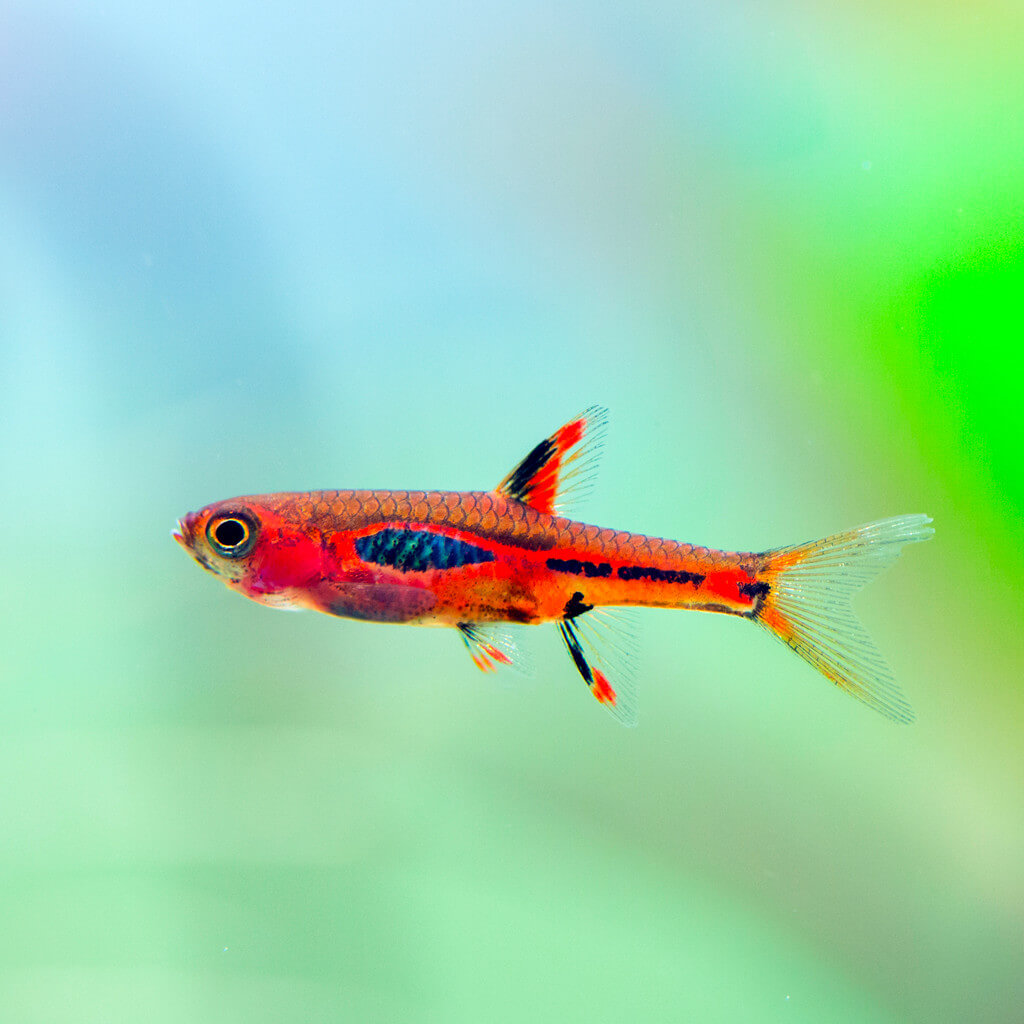
Image with text
Pair text with an image to focus on your chosen product, collection, or blog post. Add details on availability, style, or even provide a review.