
Aquapets ( KowloonAquarium)
Tricolor Angelfish (Pterophyllum Scalare)
Tricolor Angelfish (Pterophyllum Scalare)
Couldn't load pickup availability
Vibrant, multi-toned, and wonderfully eye-catching — the Tricolor Angelfish (Pterophyllum scalare) is a striking fancy angelfish variety displaying three distinct colours across the body — typically a combination of white, black, and orange or gold — creating a bold, graphic pattern that makes every fish a unique and colourful specimen. A lively and attractive centrepiece for any large community aquarium.
Overview
| Attribute | Details |
|---|---|
| Common Name | Tricolor Angelfish |
| Scientific Name | Pterophyllum scalare |
| Origin | Selectively bred fancy variety |
| Adult Size | 6 inches body length; up to 12 inches tall including fins |
| Lifespan | 8 – 12 years |
| Difficulty | Beginner – Intermediate |
| Temperament | Semi-aggressive; peaceful with similarly sized fish |
Appearance
The Tricolor Angelfish displays three distinct colour zones across the body — typically white to silver, black, and orange to gold — arranged in an irregular, koi-like pattern. The combination of three bold colours creates a vibrant, graphic appearance that is both striking and unique. Each fish displays a slightly different pattern, making every individual a one-of-a-kind specimen. The tall, flowing fins and laterally compressed body give this fish its iconic angelfish silhouette.
Water Parameters & Tank Setup
- Temperature: 75 – 84°F (24 – 29°C)
- pH: 6.0 – 7.5
- General Hardness (GH): 3 – 10 dGH
- Tank Size: Minimum 30 gallons for a pair; 55+ gallons for a group
- Substrate: Dark substrate makes the tricolor pattern pop
- Plants & Decor: Tall plants, driftwood, and open swimming space
Diet & Feeding
- Staple: High-quality flake food, pellets, and angelfish-specific foods
- Treats: Frozen bloodworms, brine shrimp, daphnia, and small feeder insects
Feed 2–3 times daily.
Compatibility & Tank Mates
Best kept with similarly sized, peaceful fish. Good tank mates include larger tetras, Corydoras, gouramis, and peaceful cichlids. Avoid very small fish and aggressive fin-nippers.
Breeding
Angelfish are open spawners and breed readily in captivity. Pairs form strong bonds and spawn on broad plant leaves or flat surfaces. Eggs hatch in 48–60 hours and fry become free-swimming within a week.
The Tricolor Angelfish is a vibrant and colourful fish that brings bold, graphic beauty to any aquarium. A lively and eye-catching centrepiece for any large community tank.
Materials
Materials
Shipping & Returns
Shipping & Returns
Dimensions
Dimensions
Care Instructions
Care Instructions
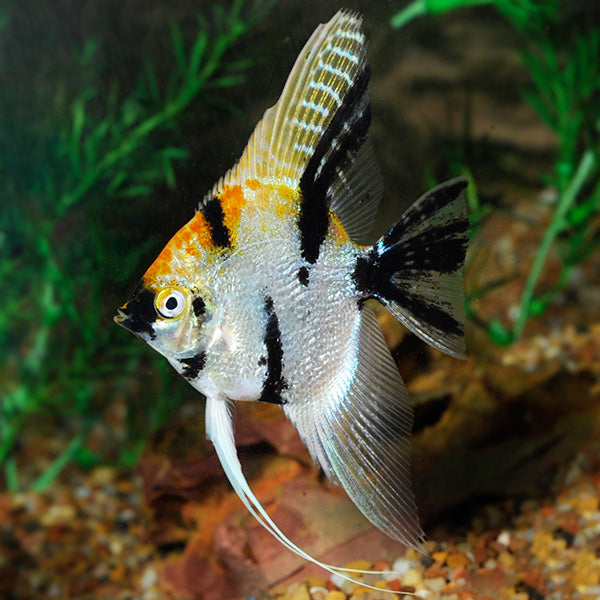
Image with text
Pair text with an image to focus on your chosen product, collection, or blog post. Add details on availability, style, or even provide a review.