
Aquapets ( KowloonAquarium)
Proserpinaca Palustris - Mermaid Weed T/C CUP
Proserpinaca Palustris - Mermaid Weed T/C CUP
Couldn't load pickup availability
Here are the details for the plant Proserpinaca palustris, commonly known as marsh mermaidweed.
It is a fascinating perennial aquatic plant native to the Americas, known for its ability to dramatically change its leaf shape depending on its environment .
Botanical Profile
Key Characteristics: Heterophylly
The most notable feature of Proserpinaca palustris is heterophylly, meaning it produces dramatically different leaf shapes based on growing conditions .
Flowers and Fruit
-
Flowers: Small and inconspicuous, they are green or with a purple tinge. They grow singly or in small clusters in the leaf axils (where the leaf meets the stem). Interestingly, they lack petals but have three sepal-like structures .
-
Fruit: A small, hard, nut-like fruit that is three-sided and does not split open when ripe. Its shape (angles sharp or rounded) helps distinguish between different varieties of the plant .
Habitat, Distribution, and Conservation
-
Habitat: It thrives in wet, sunny places like freshwater marshes, swamps, ponds, ditches, and slow-moving streams .
-
Distribution: Its native range is extensive. It is found throughout the eastern and central United States, eastern Canada, and down through Mexico, Central America, and into northwestern South America .
-
Conservation: Globally, it is considered a species of Least Concern by the IUCN. However, its population status can vary, and it is considered rare or imperiled in some states and provinces at the edge of its range .
Interesting Facts and Uses
-
Name Origin: The genus name Proserpinaca comes from Proserpina (or Persephone), the Roman goddess of spring and the underworld. This references the plant's "dual life" both above and below the water, mirroring the goddess's annual journey between the worlds .
-
Aquarium Trade: Due to its interesting leaf forms and bright green to orange coloration, it is cultivated and used as a decorative plant in aquariums and ponds .
-
Varieties: There are a few recognized varieties (like P. palustris var. crebra) that are primarily distinguished by subtle differences in their fruit .
Materials
Materials
Shipping & Returns
Shipping & Returns
Dimensions
Dimensions
Care Instructions
Care Instructions
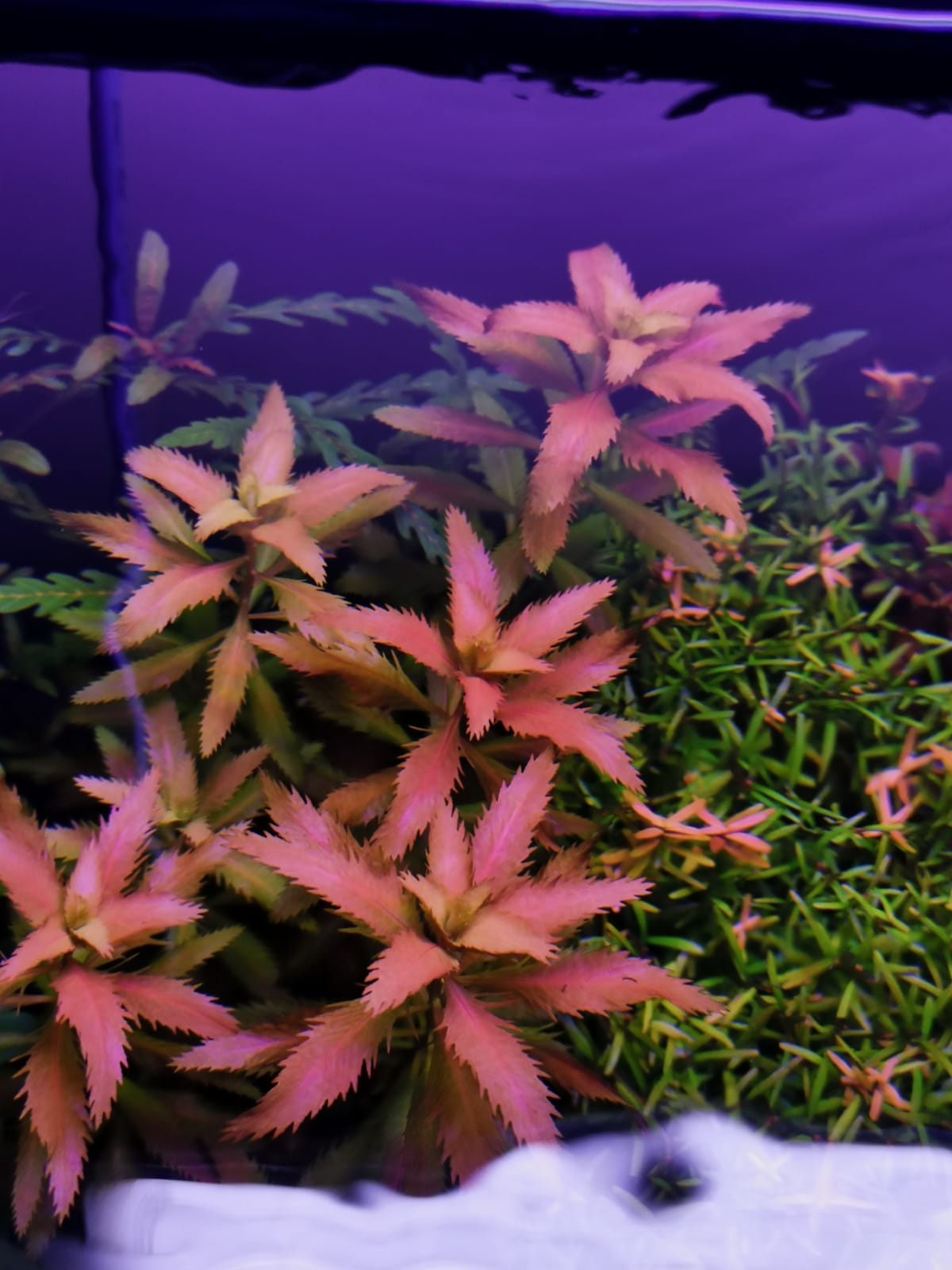
Image with text
Pair text with an image to focus on your chosen product, collection, or blog post. Add details on availability, style, or even provide a review.