
Aquapets ( KowloonAquarium)
Piano Snail (Taia shanensis)
Piano Snail (Taia shanensis)
Couldn't load pickup availability
Piano Snail (Taia shanensis)
Bold, architectural, and unlike anything else in the freshwater hobby — the Piano Snail is a true collector's species. Named for its striking black-and-white banded shell that resembles the keys of a piano, Taia shanensis is a rare freshwater snail native to the rivers and streams of Myanmar. Each shell is a natural work of art, with crisp contrasting bands that make it one of the most visually distinctive invertebrates available to aquarists.
Beyond their stunning appearance, Piano Snails are peaceful, functional members of any freshwater community — grazing on algae, biofilm, and decaying plant matter while adding an exotic focal point to planted tanks and biotope setups alike.
Highlights
- Iconic piano-key banding — bold black-and-white shell pattern; no two snails are identical
- Rare & exotic — native to Myanmar; infrequently available in the Canadian hobby market
- Natural tank cleaner — grazes on algae, biofilm, and detritus, contributing to a balanced ecosystem
- Peaceful & reef-safe — will not harm healthy plants, fish, or shrimp
- Livebearing species — gives birth to fully formed juveniles; no egg masses or rapid population explosions
- Moderate size — reaches approximately 3–5 cm; substantial enough to be a display centrepiece
Care Guide
- Tank size: 40 L (10 gal) minimum
- Temperature: 22–28°C (72–82°F)
- pH: 7.0–8.0 — slightly alkaline water supports healthy shell development
- Hardness: Moderate to hard (GH 8–18 dGH); calcium-rich water is essential for strong shell growth
- Diet: Algae, biofilm, blanched vegetables (zucchini, spinach, kale), sinking algae wafers, and calcium supplements (cuttlebone)
- Tankmates: Peaceful community fish, shrimp, and other snails; avoid pufferfish, loaches, and any snail-eating species
- Water quality: Sensitive to copper — avoid any medications or fertilizers containing copper
- Décor: Smooth substrate, driftwood, and live plants create a natural environment; avoid sharp decor that may damage the shell
Shell Care Tip
To maintain the Piano Snail’s signature shell pattern and structural integrity, ensure your water has adequate calcium and a pH above 7.0. Soft or acidic water will cause shell erosion over time, dulling the distinctive banding. A piece of cuttlebone left in the tank is an easy and effective calcium supplement.
Materials
Materials
Shipping & Returns
Shipping & Returns
Dimensions
Dimensions
Care Instructions
Care Instructions
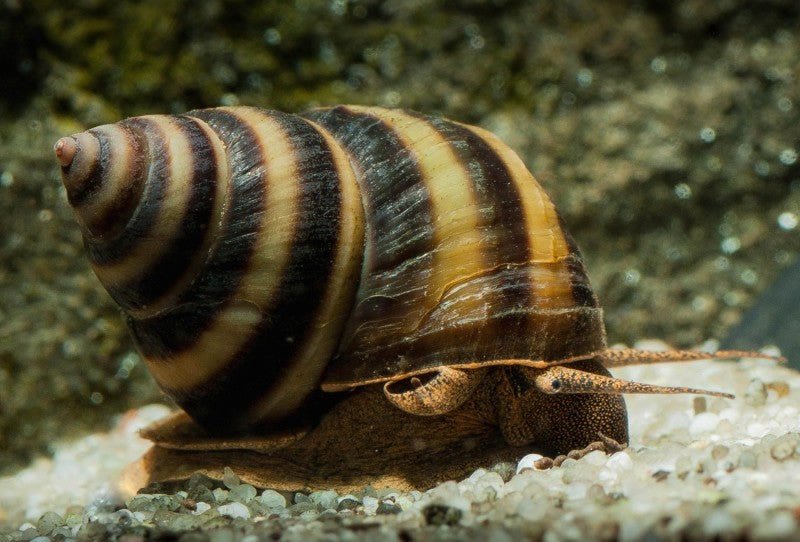
Image with text
Pair text with an image to focus on your chosen product, collection, or blog post. Add details on availability, style, or even provide a review.