Aquapets ( KowloonAquarium)
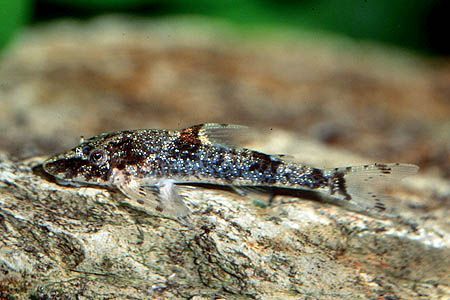
Peppermint Oto Catfish (Parotocinclus Eppleyi)
Peppermint Oto Catfish (Parotocinclus Eppleyi)
Couldn't load pickup availability
Summary Profile of Parotocinclus eppleyi
Taxonomy and Naming
Parotocinclus eppleyi was first scientifically described in 1993 by Schaefer and Provenzano . The fish's name honors Captain Marion Eppley, a physical chemist whose foundation provided financial support for the research expeditions in Venezuela that led to the species' discovery . Within the aquarium trade, it is commonly known as the "Peppermint Oto" .
Physical Characteristics and Size
This species is one of the smallest members of the armored catfish family (Loricariidae) . Like all its relatives, its body is covered in bony plates rather than scales. They are very small fish, with a maximum recorded standard length (SL) of 3.0 cm (about 1.2 inches) . Most individuals in the wild are typically 0.5 to 1 cm smaller than this maximum size .
Distribution and Habitat
Parotocinclus eppleyi is native to South America and is found specifically in the upper and middle portions of the Río Orinoco in Venezuela . As a demersal fish, it lives in freshwater environments, close to the bottom of the streams and rivers it inhabits .
Conservation Status
According to the International Union for Conservation of Nature (IUCN) Red List, Parotocinclus eppleyi is assessed as Least Concern (LC) . This assessment, made in December 2020, indicates that the species does not currently face a high risk of extinction in the wild.
Aquarium Care
Information from aquarium sources provides insights into keeping this species in captivity. They are known to be somewhat delicate, particularly during the acclimatization period after being introduced to a new tank .
-
Diet: In an aquarium setting, they benefit from the presence of driftwood and dead leaves that have been in the water for some time and developed a growth of aufwuchs (a layer of algae and small organisms) . This natural food source can be supplemented with sinking food tablets .
-
Rarity: Specimens that reach the full adult size of 3 cm are considered rare in the aquarium trade . The hardiness of imported fish can vary significantly depending on how they were handled after being caught in the wild .
Materials
Materials
Shipping & Returns
Shipping & Returns
Dimensions
Dimensions
Care Instructions
Care Instructions
Image with text
Pair text with an image to focus on your chosen product, collection, or blog post. Add details on availability, style, or even provide a review.