
Aquapets ( KowloonAquarium)
Murdannia keisak T/C CUP
Murdannia keisak T/C CUP
Couldn't load pickup availability
Overview and Identification
Murdannia keisak is a species of flowering plant in the dayflower family (Commelinaceae). It is most commonly known as marsh dewflower or Asian spiderwort . You might also hear it called aneilema, wart-removing herb, or marsh dayflower .
For a quick reference, here are its main taxonomic details:
Botanical Description
-
Flowers: The flowers are small (about 1 cm wide), with three petals that can be white, pink, blue, or purple . They bloom from late summer to early fall and can be found singly or in small clusters in the upper leaf axils . A distinctive feature is its six stamens: three fertile ones with bearded filaments and three that are sterile (staminodes) .
-
Stems: The stems are succulent, prostrate, and can grow from 12 to 30 inches (30-75 cm) long . They root readily at the lower nodes (joints), which helps the plant form dense mats .
-
Leaves: The leaves are narrow, lance-shaped, and arranged alternately along the stem. They are typically 1.5 to 7 cm long and clasp the stem with a tubular sheath .
-
Fruit & Seeds: The fruit is a small, oval capsule containing several seeds . The seeds are a food source for ducks and other waterfowl .
Native Range and Invasive Distribution
-
Native Range: This plant is native to temperate and tropical East Asia, including countries like China, Japan, Korea, Nepal, and Taiwan .
-
Introduced Range: Murdannia keisak was introduced to the United States, likely as a contaminant in rice seed imports in the early 20th century . It is now established as an invasive species in the southeastern US (from New Jersey to Florida and west to Arkansas and Louisiana) and has also been found in the Pacific Northwest (Washington and Oregon)
Materials
Materials
Shipping & Returns
Shipping & Returns
Dimensions
Dimensions
Care Instructions
Care Instructions
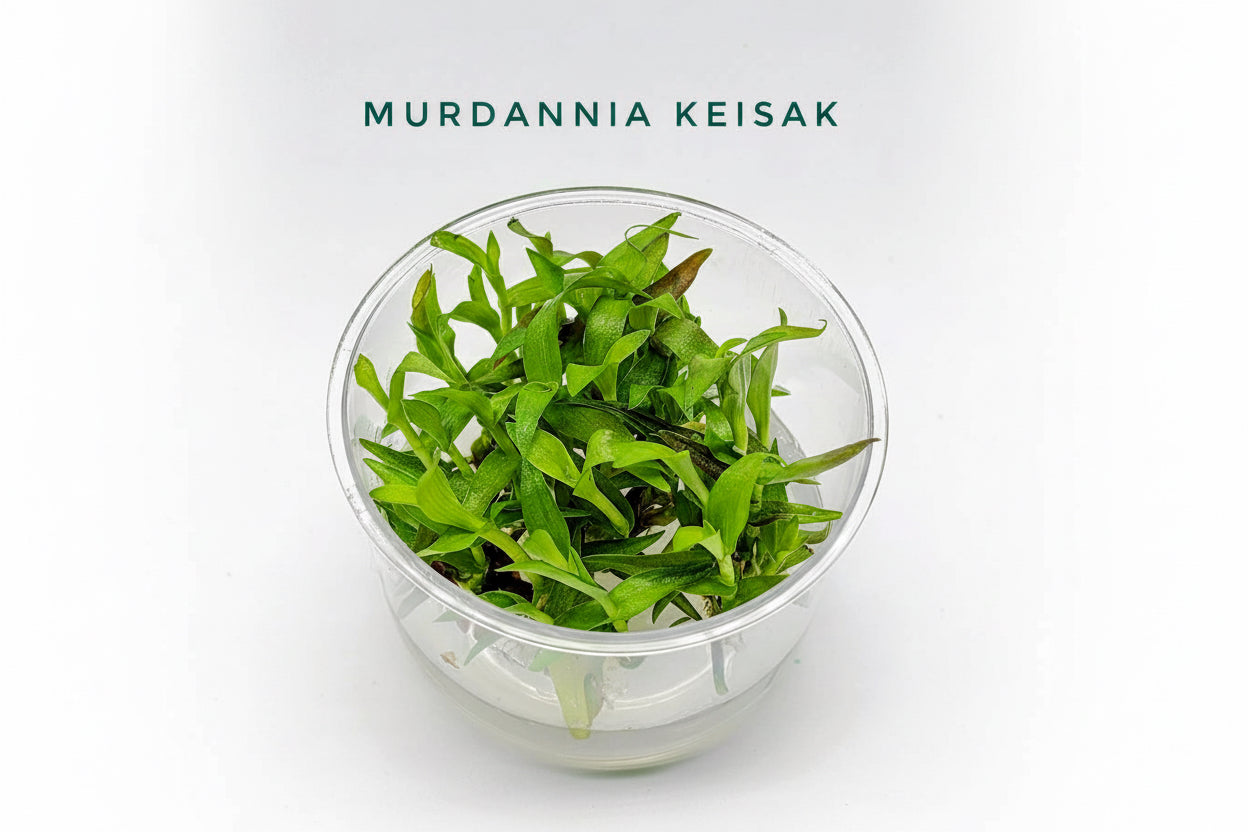
Image with text
Pair text with an image to focus on your chosen product, collection, or blog post. Add details on availability, style, or even provide a review.