
Aquapets ( KowloonAquarium)
Ludwigia Repens
Ludwigia Repens
Couldn't load pickup availability
Overview and Botanical Description
Ludwigia repens, commonly known as Creeping Primrose-willow or Red Ludwigia, is a species of flowering plant in the evening primrose family (Onagraceae) . It's a perennial herb, meaning it lives for more than two years, and is known for its mat-forming growth habit .
For a quick summary, here are its key details:
Botanical Features
-
Stems and Growth Form: The plant has branched stems that can be creeping, prostrate, or floating, typically reaching 30-80 cm in length . A key characteristic is its ability to root freely at the nodes (the points where leaves attach to the stem), which helps it form dense mats .
-
Leaves: The leaves are arranged in opposite pairs along the stem and have a glossy appearance . They are broadly lance-shaped to almost round, usually growing 1-4.5 cm long and 0.4-2.7 cm wide . The color is highly variable, ranging from dark green to a deep, vibrant red, especially under high light. The underside of the leaf is often purplish .
-
Flowers and Fruits: The flowers are small and yellow, with four petals that are only 1-3 mm long, nestled within four pointed, green sepals . These bloom mostly from spring to autumn . The fruit is a small, hard-walled capsule (4-10 mm long) that contains tiny, yellowish-brown seeds .
Natural Habitat and Distribution
Ludwigia repens is native to the warmer regions of the Americas. Its range extends across the Atlantic and Gulf coastal plains of the United States, from North Carolina to Texas, and into Mexico and the Caribbean islands like Cuba and Jamaica .
In the wild, it is typically found in wet, muddy, or damp environments. This includes the edges of pools, lakes, swamps, slow-moving creeks, and roadside ditches . It can grow in both sunny and shaded areas and is often seen forming loose mats along the water's edge . Due to its popularity in the aquarium trade, it has been introduced to other parts of the world, such as Japan, Bangladesh, and New Zealand, where it can become naturalized .
Aquarium Care and Cultivation
Ludwigia repens is one of the most popular and widely available plants in the freshwater aquarium hobby, prized for its beauty and ease of care .
-
Why it's popular for aquariums:
-
Easy to Care For: It's an excellent choice for beginners due to its hardiness and tolerance of a range of water conditions .
-
Aesthetic Appeal: It adds rich color, texture, and dimension to an aquascape. Its vivid leaves create a superb focal point, especially when planted in groups .
-
Oxygenation: Like other live plants, it helps oxygenate the water, improving the environment for fish .
-
-
Care Requirements at a Glance:
-
Lighting: Moderate to high lighting is crucial. Higher light intensities will bring out the plant's most intense red coloration .
-
Water Parameters: It is adaptable to both soft and hard water. Ideal temperatures range from 75-79°F (24-26°C), but it can tolerate temperatures as low as 59°F (15°C) . A pH of 6.0-8.0 is acceptable .
-
Substrate: A nutrient-rich substrate is beneficial for robust growth. Sand should be avoided as it packs too tightly and can suffocate the roots .
-
Supplements: While CO2 injection is not necessary, it will promote denser, healthier growth . Adding iron supplements to the water can also help intensify the red color of the leaves .
-
Propagation: This plant is very easy to propagate. Simply take a cutting from the main stem or trim the top portion and replant it into the substrate, where it will quickly grow new roots .
-
-
A Note on Cultivars: You may encounter specific cultivated varieties (cultivars) like "Super Red Mini" in the aquarium trade . These are bred for particularly intense coloration or a more compact growth form but share the same general care requirements as the standard species.
Materials
Materials
Shipping & Returns
Shipping & Returns
Dimensions
Dimensions
Care Instructions
Care Instructions
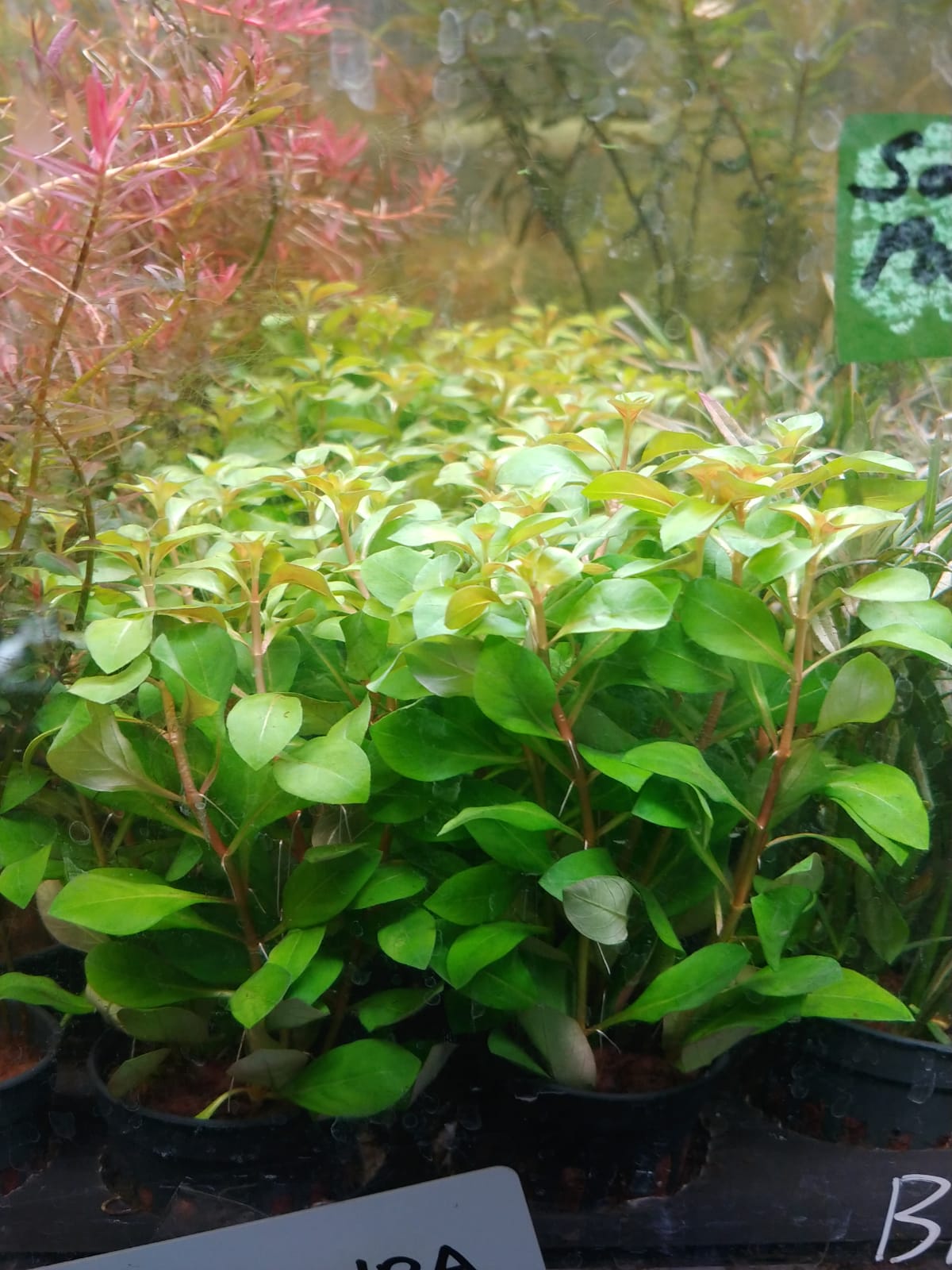
Image with text
Pair text with an image to focus on your chosen product, collection, or blog post. Add details on availability, style, or even provide a review.