
Aquapets ( KowloonAquarium)
Hygrophila Lacustris
Hygrophila Lacustris
Couldn't load pickup availability
Taxonomy & Names
Note on Taxonomy: There is some debate among botanists. Some recent sources suggest that H. lacustris might actually be part of a more widespread, variable species called Hygrophila costata. However, it is still widely recognized as a separate taxon, particularly in resources focused on the flora of the Southeastern United States .
Physical Characteristics
-
Growth Form: An emergent or submersed aquatic plant, typically found growing upright in shallow water. It often has a "fern-like" appearance and can form dense stands .
-
Height: Stems usually grow around 3 feet (approx. 90 cm) tall .
-
Stems: The stems are often branching and will root at the nodes (the points where leaves attach), which helps the plant spread. They are described as square-shaped .
-
Leaves: The leaves are arranged in opposite pairs along the stem. They are long and narrow (lanceolate to elliptical), roughly 9 cm long and only 10 mm wide. The foliage is typically a shade of green .
-
Flowers: Small, tubular flowers bloom from summer to early fall (June to September). They are described as bluish-white and are nestled in the leaf axils (where the leaf meets the stem) .
Habitat & Distribution
-
Native Range: It is native to the southeastern United States (from Georgia and Florida west to Texas) and is also found in the West Indies .
-
U.S. States: It has been documented in Alabama, Florida, Georgia, Louisiana, Mississippi, and Texas .
-
Preferred Habitat: As its common name suggests, it grows in wet, sunny places. You'll find it in shallow water of swamps, marshes, ponds, and along shores .
-
Wetland Indicator: It is classified as OBL (Obligate Wetland) , meaning it almost always occurs in wetlands .
Ecological Role & Adaptations
-
Wildlife Value: The plant provides habitat. Its root systems can be used by macroinvertebrates, and birds may forage in patches of it . The flowers also attract pollinators like bees and butterflies .
-
Salinity Tolerance: It has a low tolerance for salt. It will typically die if water salinity rises above 3 parts per thousand (ppt) .
-
Erosion Control: Its root system helps stabilize sediments along shorelines .
Aquarium Cultivation
Hygrophila lacustris is also known in the aquarium trade, sometimes under the name "Lake Hicotea" . A Chinese aquarium source provides specific care details :
-
Difficulty: Moderate.
-
Lighting: Requires strong light to grow well.
-
Temperature: Prefers warm water between 22-28°C (72-82°F) .
-
Water Parameters: Soft to moderately hard water (2-12 dH) with a slightly acidic to neutral pH (6.0-7.2).
-
CO2 and Nutrients: Adding CO2 and fertilizers is beneficial for healthy growth.
-
Placement: Often used as a mid-ground or background plant in larger aquariums.
Conservation Status
According to NatureServe, its global conservation status is ranked as G5, meaning it is considered "Secure" across its range . It is not listed under the U.S. Endangered Species Act.
Summary of Key Details
Materials
Materials
Shipping & Returns
Shipping & Returns
Dimensions
Dimensions
Care Instructions
Care Instructions
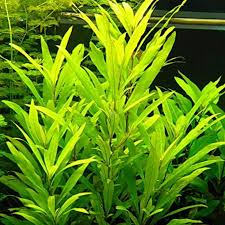
Image with text
Pair text with an image to focus on your chosen product, collection, or blog post. Add details on availability, style, or even provide a review.