
Aquapets ( KowloonAquarium)
Cryptocoryne Parva
Cryptocoryne Parva
Couldn't load pickup availability
Overview and Origin
Cryptocoryne parva is a freshwater aquatic plant and is the smallest known member of the Cryptocoryne genus . Its species name, "parva," is Latin for "small," which directly refers to its diminutive size . It is native to the central highlands of Sri Lanka, specifically near the city of Kandy, where it grows in dense colonies along riverbanks .
Physical Characteristics
This plant is prized for its compact size and bright green color, which distinguishes it from many other Cryptocorynes that often have purplish undersides .
-
Height: It typically reaches a height of 2 to 6 cm when grown submerged in an aquarium, rarely exceeding 10 cm . Emersed (grown out of water) forms can sometimes grow slightly taller .
-
Leaves: It forms a small rosette of narrow, bright green leaves. Unlike many other Cryptocoryne species, its leaves do not change shape dramatically when transitioning from emerged to submerged growth .
Water and Tank Conditions
C. parva is quite adaptable once established, but it has some specific preferences to truly thrive.
Key Care Requirements
-
Lighting: This is one of the most critical factors. Unlike many other Cryptocorynes that tolerate low light, C. parva requires medium to high lighting to grow well . In lower light, its growth will become exceptionally slow, and it may be prone to melting .
-
Substrate: It benefits significantly from a nutrient-rich substrate. Using root tabs or a nutritious base layer like aquasoil is highly recommended to support its growth .
-
CO₂ Injection: While it can survive in low-tech setups without it, supplementing with CO₂ will noticeably speed up its very slow growth rate and lead to a healthier, denser carpet .
Growth and Propagation
-
Growth Pattern: C. parva is notoriously slow-growing, even under optimal conditions. This requires patience but also makes it very low-maintenance once established .
-
Propagation: In the aquarium, it propagates by forming lateral shoots on its rhizome and sending out runners, similar to grass. To propagate, you can simply separate portions of the rhizome or cut off daughter plants once they are established .
-
Initial Planting: When first planted, it's common for some leaves to "melt" (die back) as the plant acclimates to the new water conditions. It's best to remove any dying matter and wait for new, healthy growth . Plant small plantlets a few centimeters apart to give them room to spread and form a carpet over time .
Aquascaping Uses
Its small size makes Cryptocoryne parva an ideal choice for specific roles in aquascaping:
-
Foreground Plant: It is perfect for creating a grassy, lawn-like foreground or ground cover in both large aquariums and smaller nano tanks .
-
Hardscape Accent: It looks very natural when planted at the base of rocks or driftwood .
-
Dutch-Style Aquariums: Its rosette growth pattern makes it suitable for creating "streets" or pathways in more formally designed layouts .
Materials
Materials
Shipping & Returns
Shipping & Returns
Dimensions
Dimensions
Care Instructions
Care Instructions
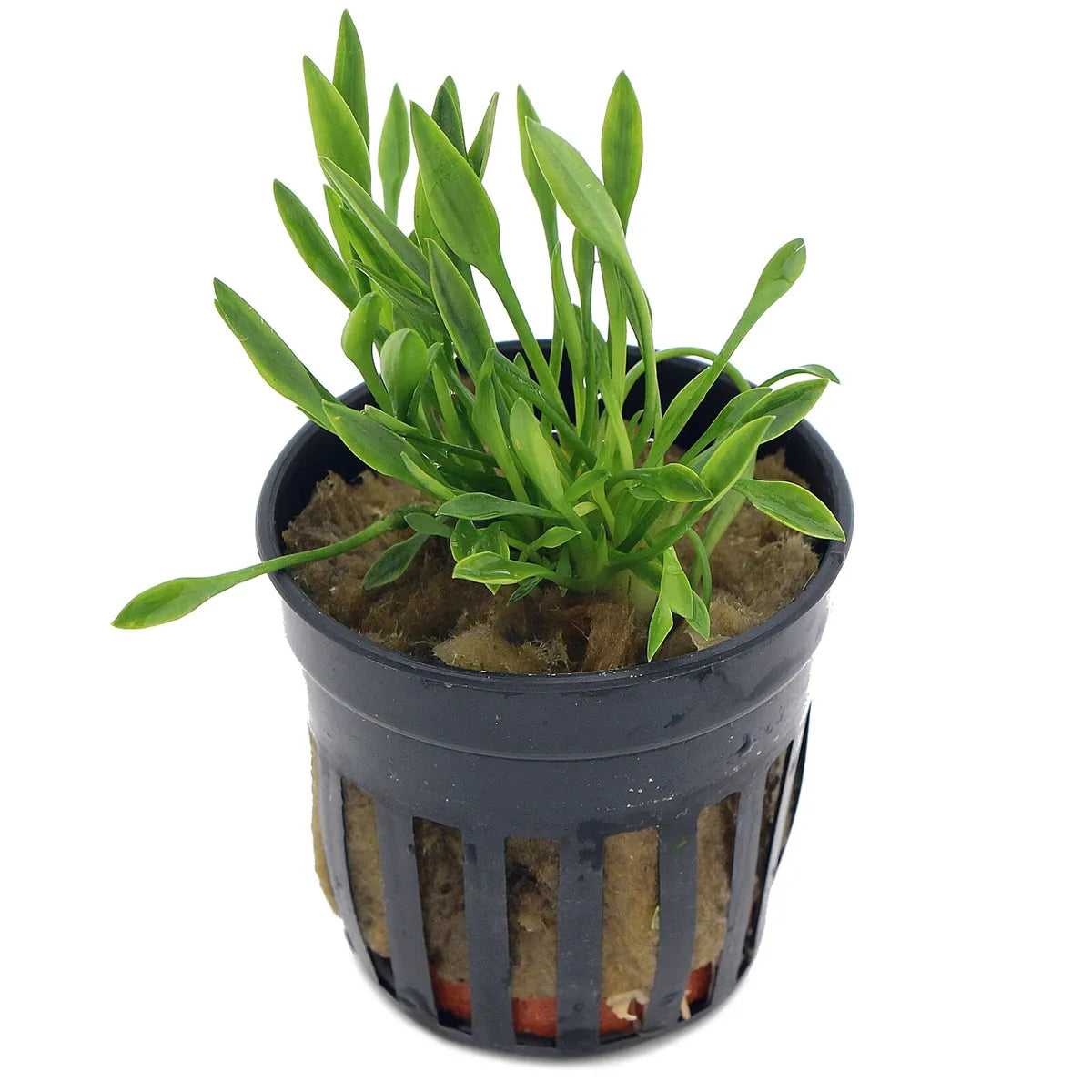
Image with text
Pair text with an image to focus on your chosen product, collection, or blog post. Add details on availability, style, or even provide a review.