
Aquapets ( KowloonAquarium)
Cryptocoryne Nurii sp TC
Cryptocoryne Nurii sp TC
Couldn't load pickup availability
Cryptocoryne nurii is a species of aquatic plant highly prized by aquarium hobbyists for its beautiful and variable foliage, though it is also known for being challenging to cultivate.
Botanical & General Information
-
Etymology: The species name "nurii" honors Mohamed Nur, a plant collector and the discoverer of the species .
Description
-
Leaves: The leaves are lance-shaped to elliptical, typically 8-12 cm long and 2-3 cm wide. They have a distinctive, often bullate (blistered or puckered) texture and a wavy (undulate) margin . The color is highly variable, ranging from dark green to brownish-purple, often with mottled patterns of light brown, dark brown, or even vibrant red . The leaf stalk (petiole) is at least as long as the leaf blade .
-
Growth Form: It is a rhizomatous plant that forms a rosette of leaves . The plant can grow to a height of 25-40 cm .
-
Growth Rate: It is known for being an extremely slow-growing plant .
-
Flower: Like all Cryptocorynes, it produces a distinctive inflorescence called a spathe. The spathe is 7-15 cm long, purple-red in color, and has a warty (verrucose) surface .
Native Habitat & Distribution
-
Geography: The plant is native to the southern part of the Malay Peninsula and the island of Sumatra .
-
Habitat: It grows as a helophyte (a marsh plant that can tolerate submersion) in clear, fast-flowing forest streams and small rivers .
-
Water Parameters in Habitat: The water in its natural habitat is very soft and acidic, with a pH around 5 to 6.5 and cool temperatures between 22-24°C .
Aquarium Care & Cultivation
Cryptocoryne nurii has a reputation as a difficult plant to keep in an aquarium . Success largely depends on replicating its natural, soft-water conditions.
-
Water pH: 5.0 - 7.5 (Optimal 5.5-6.5) . It strongly prefers acidic conditions.
-
Lighting: Low to medium intensity . Intense light is not necessary and may promote algae .
-
Substrate: A nutrient-rich substrate is highly recommended .
-
CO2: Not strictly necessary but highly recommended for better, healthier growth .
-
Propagation: By division of the rhizome or by daughter plants that grow from the mother plant .
Special Notes & Tips
-
Extreme Sensitivity: This plant is notoriously sensitive to changes in water parameters. Moving it or experiencing sudden shifts in water chemistry can cause it to "melt" (rapidly lose its leaves) .
-
Acclimation Difficulty: Even newly imported, healthy plants may struggle to acclimate to aquarium conditions, often undergoing morphological changes before eventually perishing .
-
Rarity: It is considered a rare and highly sought-after plant in the aquarium trade .
-
Conservation: There is some indication that its natural biotope (habitat) may be threatened or destroyed .
Materials
Materials
Shipping & Returns
Shipping & Returns
Dimensions
Dimensions
Care Instructions
Care Instructions
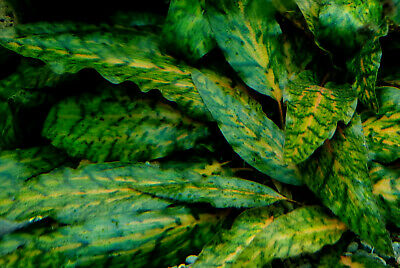
Image with text
Pair text with an image to focus on your chosen product, collection, or blog post. Add details on availability, style, or even provide a review.