

Aquapets ( KowloonAquarium)
Purple Vampire Crab (Geosesarma Bogorensis)
Purple Vampire Crab (Geosesarma Bogorensis)
Couldn't load pickup availability
Purple Vampire Crab — The Regal Jewel of the Paludarium
Mysterious, regal, and breathtakingly beautiful, the Purple Vampire Crab (Geosesarma bogorensis) is one of the most coveted and visually stunning freshwater crabs in the hobby. With its deep violet-purple body, contrasting pale cream to yellow eyes, and compact jewel-like form, this species from the tropical forests of Java, Indonesia is a true showpiece — a living gemstone that transforms any paludarium into something extraordinary.
Semi-terrestrial and full of personality, Purple Vampire Crabs are active, curious explorers that spend much of their time on land, foraging through leaf litter and climbing driftwood and cork bark. Their striking colouration and interactive behaviour make them one of the most rewarding and photographed invertebrates in the freshwater hobby.
Care at a Glance
- Common Name: Purple Vampire Crab
- Scientific Name: Geosesarma bogorensis
- Origin: Java, Indonesia (tropical forest streams and riverbanks)
- Adult Size: Carapace up to ~2.5 cm; legs span wider
- pH: 7.0 – 8.0
- Temperature: 22 – 28°C (72 – 82°F)
- Humidity: 70 – 80% (essential for semi-terrestrial lifestyle)
- Temperament: Generally peaceful; males may spar with each other
- Habitat Type: Semi-terrestrial — requires both land and water access
- Difficulty: Moderate
⚠️ Important: Paludarium Setup Required
Purple Vampire Crabs are semi-terrestrial and cannot be kept in a standard fully aquatic aquarium. They require a paludarium or terrarium setup with:
- A generous land area (at least 70% of the enclosure) with moist substrate — coconut fibre, organic topsoil, or a mix works well
- A shallow freshwater pool or water section for drinking, soaking, and moulting
- High humidity (70–80%) maintained through regular misting and a tight-fitting lid
- Hiding spots and climbing structures: cork bark, driftwood, leaf litter, and lush tropical planting (pothos, ferns, mosses, bromeliads)
Feeding
Omnivorous scavengers. Accept a wide variety of foods: small insects (crickets, fruit flies, springtails), frozen bloodworms, brine shrimp, blanched vegetables, leaf litter, and commercial invertebrate foods. Feed every 1–2 days, removing uneaten food promptly to prevent mould in the humid environment.
Compatible Tank Mates
Best kept as a species-only group or with other small, peaceful semi-terrestrial invertebrates. Keep one male with one or more females to minimize male-on-male aggression. Avoid housing with fully aquatic species or large, aggressive animals.
Moulting
Vampire Crabs moult periodically as they grow. During and after moulting they are soft and extremely vulnerable — provide ample hiding spots and avoid disturbing them. Do not remove the shed exoskeleton; the crab will consume it to reclaim valuable minerals including calcium.
📸 Photos are for reference only. Actual crabs may vary slightly in colour and pattern — each one is uniquely beautiful!
Materials
Materials
Shipping & Returns
Shipping & Returns
Dimensions
Dimensions
Care Instructions
Care Instructions
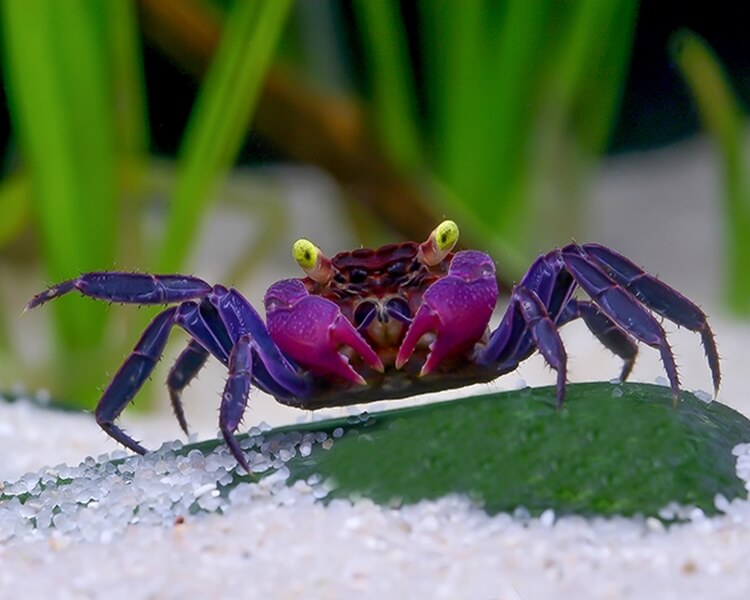
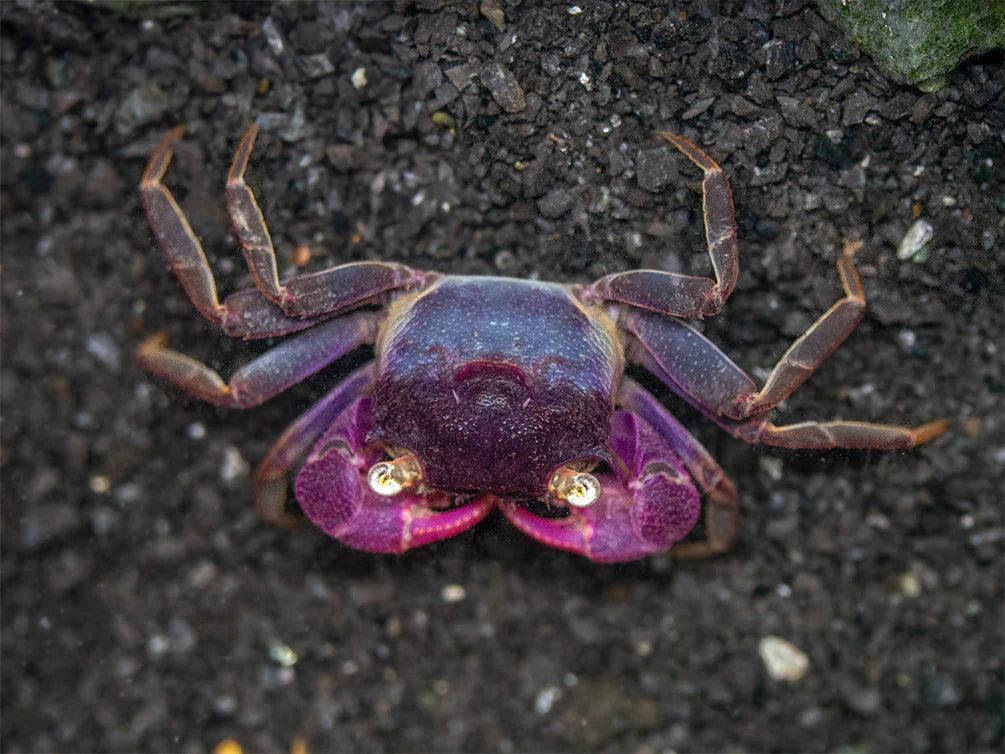
Image with text
Pair text with an image to focus on your chosen product, collection, or blog post. Add details on availability, style, or even provide a review.