

Aquapets ( KowloonAquarium)
Blue Borneo Crab (Lepidothelphusa Blue)
Blue Borneo Crab (Lepidothelphusa Blue)
Couldn't load pickup availability
Fully aquatic crab.
Blue Borneo Crab — A Rare Fully Aquatic Gem from Borneo
Stunning, rare, and unlike anything else in the freshwater hobby, the Blue Borneo Crab (Lepidothelphusa sp. "Blue") is a fully aquatic freshwater crab from the pristine rivers and streams of Borneo. With its striking blue colouration and compact, jewel-like appearance, this is a true collector’s species — one that brings an exotic, otherworldly presence to any aquarium it inhabits.
Unlike many freshwater crabs that require land access, the Blue Borneo Crab is fully aquatic, making it far more compatible with traditional aquarium setups. Watch it explore rockwork, driftwood, and substrate with curious, deliberate movements — a fascinating and interactive invertebrate that never fails to captivate.
Care at a Glance
- Common Name: Blue Borneo Crab
- Scientific Name: Lepidothelphusa sp. "Blue"
- Origin: Borneo (freshwater rivers and streams)
- Adult Size: Carapace up to ~3 cm; legs span wider
- pH: 6.5 – 7.5
- Temperature: 22 – 26°C (72 – 79°F)
- Temperament: Generally peaceful; may be opportunistic with very small tank mates
- Aquatic Type: 💧 Fully aquatic — no land access required
- Difficulty: Moderate
Tank & Setup Tips
As a fully aquatic species, the Blue Borneo Crab can be kept in a standard aquarium without the need for a paludarium or land area. A tank of at least 10–15 gallons is recommended, aquascaped with smooth rocks, driftwood, caves, and dense planting to provide hiding spots and territory. They are natural climbers and explorers — a tight-fitting lid is essential to prevent escapes.
Maintain clean, well-filtered water with gentle to moderate flow. They are sensitive to poor water quality and ammonia spikes, so a cycled, stable aquarium is essential. Avoid copper-based medications, which are lethal to all invertebrates.
Feeding
Omnivorous scavengers. Accept a wide variety of foods including sinking pellets, algae wafers, blanched vegetables (zucchini, spinach, cucumber), frozen bloodworms, and brine shrimp. They will also graze on algae and biofilm. Feed every 1–2 days, removing uneaten food promptly to maintain water quality.
Compatible Tank Mates
Best kept with medium-sized, robust fish that won’t harass them during moulting. Suitable companions include larger tetras, rasboras, gouramis, and peaceful loaches. Avoid very small nano fish or shrimp that may be predated, and aggressive fish that may nip at their legs or antennae.
Moulting
Like all crustaceans, Blue Borneo Crabs moult periodically as they grow. During and after moulting they are soft and vulnerable — provide plenty of hiding spots and avoid disturbing them. Do not remove the shed exoskeleton; the crab will consume it to reclaim valuable minerals.
📸 Photos are for reference only. Actual crabs may vary slightly in colour and pattern — each one is uniquely beautiful!
Materials
Materials
Shipping & Returns
Shipping & Returns
Dimensions
Dimensions
Care Instructions
Care Instructions
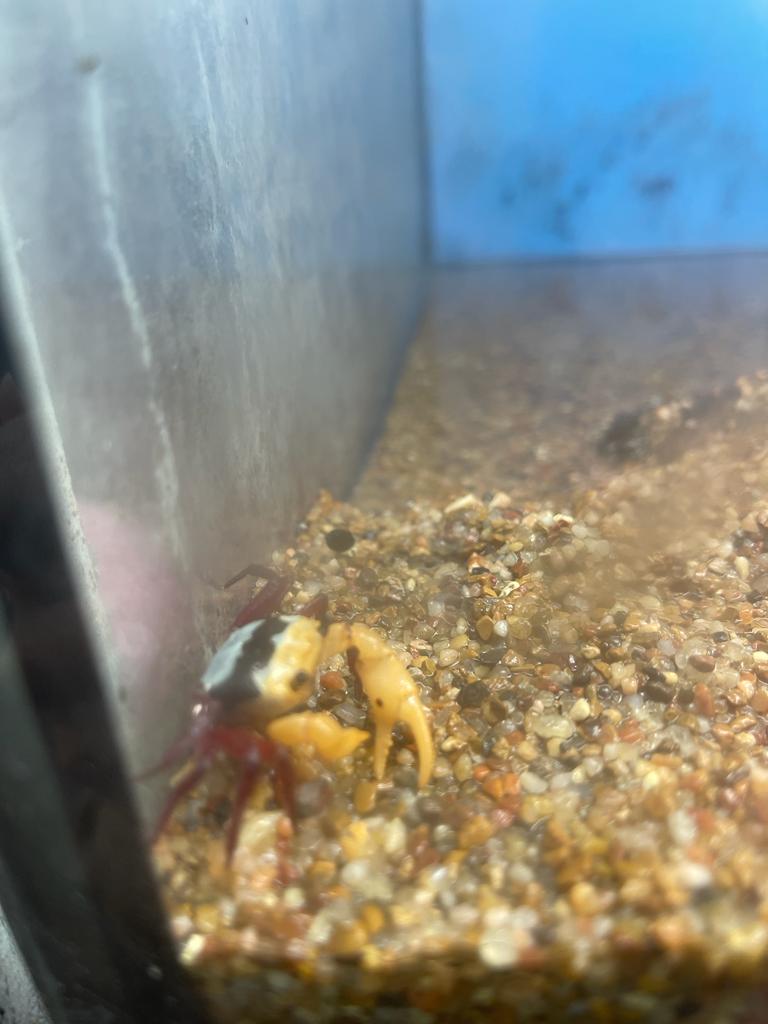
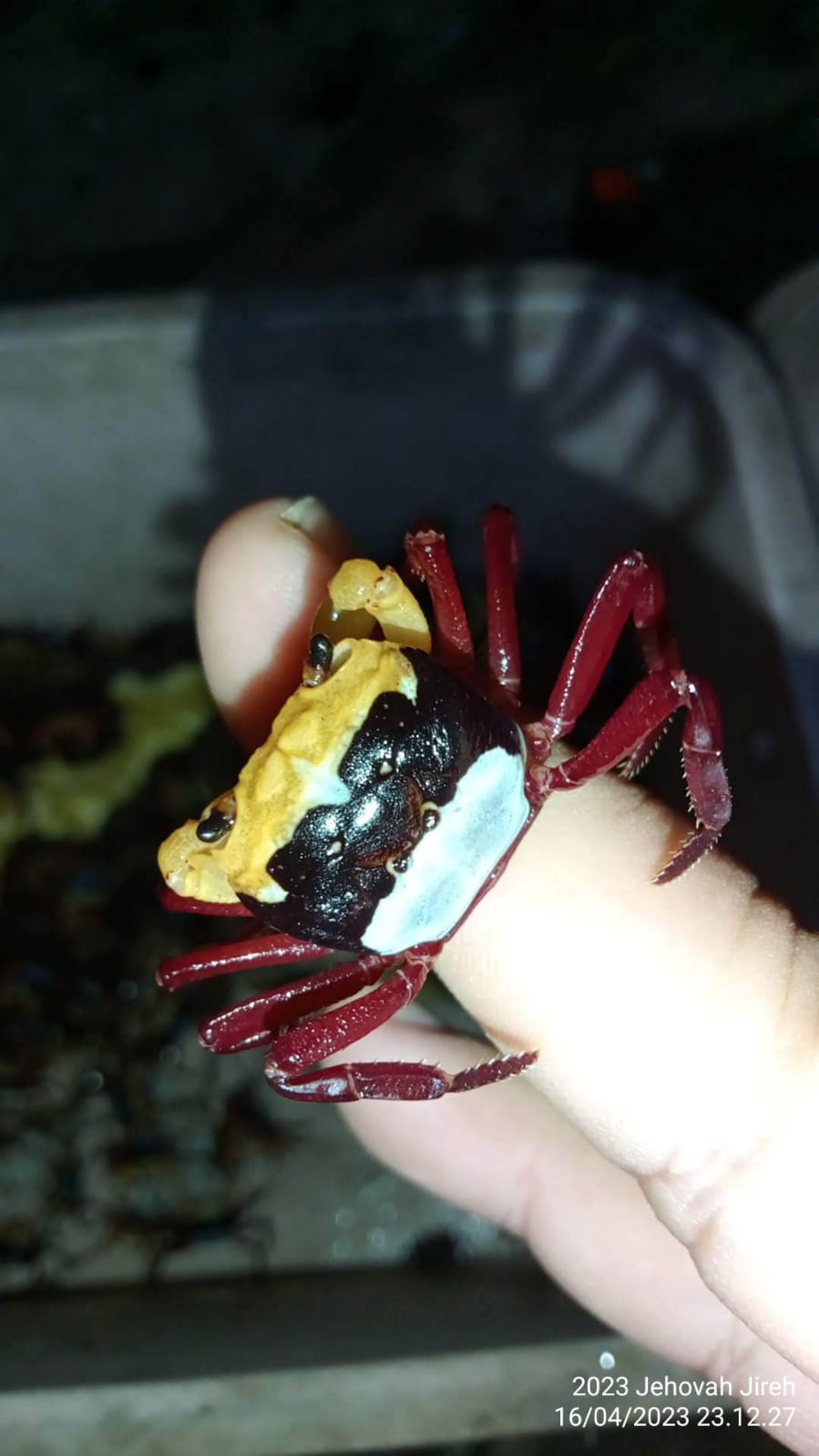
Image with text
Pair text with an image to focus on your chosen product, collection, or blog post. Add details on availability, style, or even provide a review.