
Aquapets ( KowloonAquarium)
Ceratopteris Thalictroides (Water Sprite)
Ceratopteris Thalictroides (Water Sprite)
Couldn't load pickup availability
Ceratopteris thalictroides, commonly known as water sprite, water fern, or Indian fern, is a species of aquatic fern found throughout the world's tropical and subtropical regions . It belongs to the family Pteridaceae . The species is highly polymorphic, meaning its appearance can vary significantly depending on environmental conditions like water depth and humidity .
Here is a quick summary of its classification and status:
Physical Description
This is an annual or perennial aquatic herb that can be floating or rooted in mud . It has a short, erect rhizome that holds the plant in the substrate . The fronds are dimorphic, meaning sterile and fertile fronds have different forms .
-
Sterile Fronds: These fronds are broader and can be floating or emergent. They are designed for photosynthesis. The leaf blade is typically 2 to 4 times pinnately divided, with lobes that can be broad, lobed, or irregularly shaped . When submerged, these fronds are often limp and more finely divided .
-
Fertile Fronds: These fronds are erect and taller than the sterile ones, usually standing above the water . They are more narrowly and finely divided, with ultimate segments that are linear and resemble thick needles or horns . The margins of these segments are revolute (strongly rolled back), covering the sporangia when young .
Habitat and Ecology
Ceratopteris thalictroides thrives in wet, lowland environments.
-
Habitat: It is typically found rooted in the muddy margins of swamps, ponds, marshes, flooded fields (like rice paddies), and slow-moving rivers and ditches . It can also sometimes be found floating freely in deeper water .
-
Life Cycle: It has a very short life cycle; the entire process from spore germination to a new spore-producing plant can be completed in less than 30 days . It reproduces via spores and also vegetatively through plantlets (bulbils) that can develop on the fronds .
Geographic Distribution
As a pantropical species, its distribution is widespread.
-
Global: Native to tropical and subtropical regions around the world, including Africa, Asia, the Americas, and Australia .
-
United States: It is found in peninsular Florida and has been reported in other southern states like California, Louisiana, and Texas . However, it is nonnative to Florida .
-
Asia: Widely distributed across China, Japan, and Southeast Asia .
Uses and Importance
This fern has a variety of uses, making it a plant of interest in different fields.
-
Culinary: The young, unfurled leaves are edible and consumed as a green vegetable or in salads, similar to watercress. This is a common practice in parts of Asia, including Japan, Malaysia, and Madagascar .
-
Aquarium Trade: It is a very popular ornamental plant in freshwater aquariums and aquascapes, known as "water sprite" . Its fast growth and fine root system provide excellent cover and hiding places for fish fry .
-
Medicinal: In traditional medicine, it has been used in poultices for skin complaints like carbuncles and as a styptic to stop bleeding .
-
Scientific Research: Ceratopteris species, including C. thalictroides and C. richardii, serve as important model organisms for studying developmental biology, genetics, and plant physiology due to their simple life cycle and genetics .
-
Other Uses: It can be used as a green manure in rice fields .
Cultivation and Care
For those interested in growing water sprite, particularly in an aquarium setting, here are its key requirements :
-
Light: Prefers bright light.
-
Water Temperature: 22°C to 30°C (72°F to 86°F).
-
pH Level: 6.5 to 7.5.
-
Placement: Can be planted in the substrate or left floating on the water surface.
-
Growth Rate: Very fast.
Materials
Materials
Shipping & Returns
Shipping & Returns
Dimensions
Dimensions
Care Instructions
Care Instructions
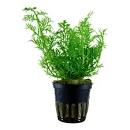
Image with text
Pair text with an image to focus on your chosen product, collection, or blog post. Add details on availability, style, or even provide a review.