
Aquapets ( KowloonAquarium)
Butterfly Hillstream Loach (Beaufortia kweichowensis)
Butterfly Hillstream Loach (Beaufortia kweichowensis)
Couldn't load pickup availability
Beaufortia kweichowensis is a captivating freshwater fish renowned for its unique, flattened body perfectly adapted for life in fast-flowing streams. It's not a true pleco (it's a loach), but its algae-eating habits and sucker-like mouth have earned it the common name. It's a peaceful, specialist fish best suited for mature, well-oxygenated aquariums.
1. Taxonomy & Origin
-
Family: Gastromyzontidae (Hillstream loaches)
-
Native Range: Fast-flowing hill streams and rivers in Guizhou province, China (its species name "kweichowensis" refers to the old romanization of Guizhou). It is not native to Hong Kong, but that name stuck in the aquarium trade.
-
Habitat: Oxygen-rich, cool, clear water with rocky substrates and abundant biofilm.
2. Physical Description
-
Body: Extremely flattened (depressed) and streamlined to resist strong currents.
-
Fins: Wide, wing-like pectoral and pelvic fins that help it cling to surfaces and "helicopter" across rocks.
-
Mouth: Ventral sucker mouth used to graze on biofilm and algae from rocks.
-
Coloration & Pattern: Attractive pattern of dark brown to black reticulations (net-like lines) and spots over a lighter tan or olive background. The pattern provides excellent camouflage on streambed rocks.
-
Size: Small, typically reaching 5-7 cm (2-2.8 inches) in length.
3. Aquarium Care Requirements (Challenging Beginner Fish)
This species has specific needs that must be met for it to thrive.
| Parameter | Ideal Condition |
|---|---|
| Tank Size | Minimum 20 gallons (75L) long. Larger is better for stability and providing adequate grazing territory. |
| Water | Cool & Pristine: 68-78°F (20-26°C). pH: 6.8-7.8. Hardness: Prefers moderate hardness. Ammonia/Nitrite: Must be 0. Nitrates kept very low (<20 ppm). |
| Key Factor | HIGH OXYGENATION & FLOW: A powerful filter (canister is ideal) and/or a dedicated wave/powerhead to create strong, laminar flow. They are adapted to near-100% oxygen saturation. |
| Substrate | Smooth sand or fine, rounded gravel to prevent belly abrasions. |
| Decor | Essential: Abundant smooth, flat rocks and large pebbles to provide grazing surfaces. Driftwood is also appreciated. |
| Filtration | Must be robust. The tank should be well-cycled and mature (at least 1-2 months old) to ensure a steady growth of biofilm/algae for food. |
4. Diet & Feeding
-
Primary Diet: Aufwuchs – the layer of algae, microorganisms, and biofilm growing on surfaces. They are constant grazers.
-
Supplemental Feeding: Must be fed if the tank is too clean. Offer:
-
High-quality, sinking algae wafers/spirulina pellets.
-
Blanched vegetables (zucchini, cucumber, spinach).
-
Frozen foods like daphnia or bloodworms (sparingly, as treats).
-
-
Important: They are not scavengers and cannot survive on leftovers alone. They must have dedicated feeding.
5. Behavior & Tankmates
-
Temperament: Peaceful, somewhat shy, and non-territorial with their own kind. They are social and do best in groups of 3-6, which encourages natural behavior.
-
Activity: Diurnal (active during the day). They spend most time clinging to rocks, glass, or decor.
-
Suitable Tankmates: Other peaceful, cool-water, flow-loving fish such as:
-
White Cloud Mountain Minnows
-
Danios (e.g., Celestial Pearl Danios)
-
Other peaceful hillstream loaches (e.g., Sewellia lineolata)
-
Small, non-aggressive gobies
-
-
Avoid: Large, aggressive, or boisterous fish. Also avoid very warm-water fish like most tetras and angelfish.
Materials
Materials
Shipping & Returns
Shipping & Returns
Dimensions
Dimensions
Care Instructions
Care Instructions
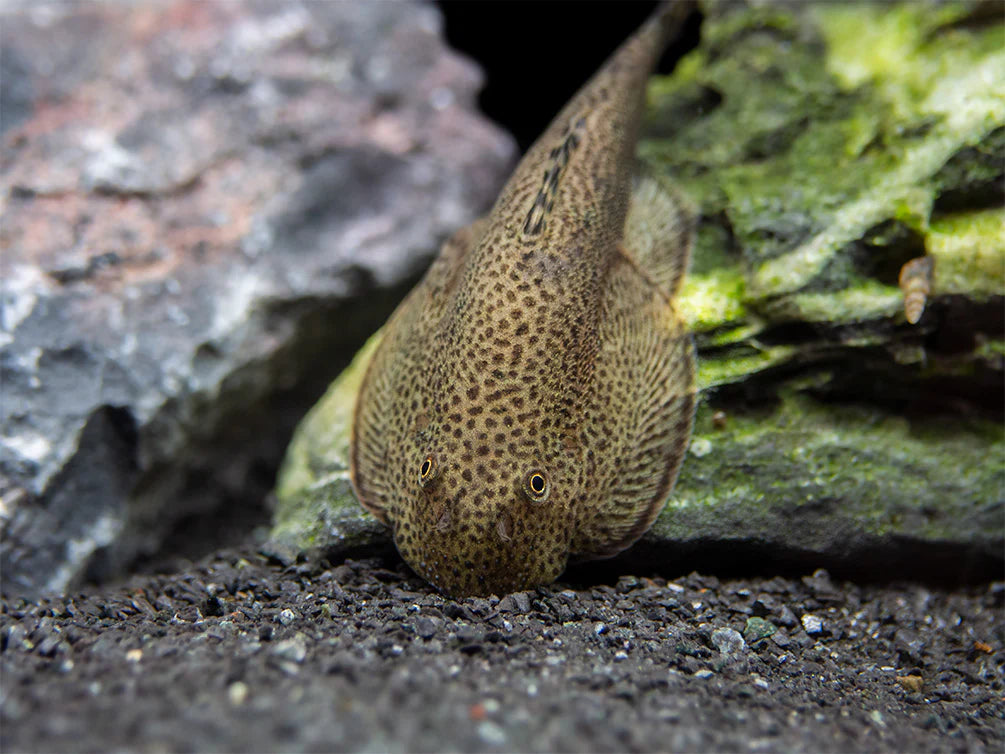
Image with text
Pair text with an image to focus on your chosen product, collection, or blog post. Add details on availability, style, or even provide a review.