
Aquapets ( KowloonAquarium)
Blackwing Hatchetfish (Carnegiella Marthae)
Blackwing Hatchetfish (Carnegiella Marthae)
Couldn't load pickup availability
The Surface Dweller with Wings of Black
The Blackwing Hatchetfish (Carnegiella marthae) is a fascinating and unique surface-dwelling fish from the blackwater rivers of South America. Named for the striking dark pectoral fins that resemble outstretched wings, this small but captivating species occupies the very top of the water column — a niche rarely filled in community aquariums. Its deep, keel-shaped body and upturned mouth are perfectly adapted for life at the surface, where it hunts for insects and small invertebrates.
Overview
| Attribute | Details |
|---|---|
| Common Name | Blackwing Hatchetfish |
| Scientific Name | Carnegiella marthae |
| Origin | Upper Orinoco & Rio Negro, South America |
| Adult Size | 3.5 – 4 cm (1.3 – 1.6 in) |
| Lifespan | 3 – 5 years |
| Difficulty | Intermediate |
| Temperament | Peaceful; surface-dwelling schooling fish |
Appearance
The Blackwing Hatchetfish has a distinctively deep, laterally compressed body with a flat back and strongly curved belly — the classic hatchet silhouette. Dark, wing-like pectoral fins contrast against a silvery body with subtle dark patterning along the flanks. A truly unusual and eye-catching fish that adds dimension to the upper zone of any aquascape.
Water Parameters
- Temperature: 22 – 28°C (71.6 – 82.4°F)
- pH: 6.5 – 7.2
- General Hardness (GH): 3 – 10
- Carbonate Hardness (KH): 1 – 2
- TDS: 100 – 300 ppm
Prefers soft, slightly acidic water. Thrives in blackwater setups with floating plants and tannins. A tight-fitting lid is essential — hatchetfish are skilled jumpers.
Diet & Feeding
- Staple: High-quality micro pellets or fine floating flake food
- Treats: Fruit flies, baby brine shrimp, micro worms, and small freeze-dried insects
Feed at the surface 2–3 times daily. Live or frozen surface foods are especially relished and help bring out natural feeding behaviour.
Compatibility & Tank Mates
- Best kept in schools of 6 or more
- Peaceful with mid- and bottom-dwelling species — they rarely venture below the surface
- Ideal companions: small tetras, corydoras, dwarf cichlids, and small rasboras
- Avoid boisterous or large fish that may outcompete them at feeding time
Sold individually. All livestock is inspected and conditioned before sale. Live arrival guaranteed under our livestock policy.
Materials
Materials
Shipping & Returns
Shipping & Returns
Dimensions
Dimensions
Care Instructions
Care Instructions
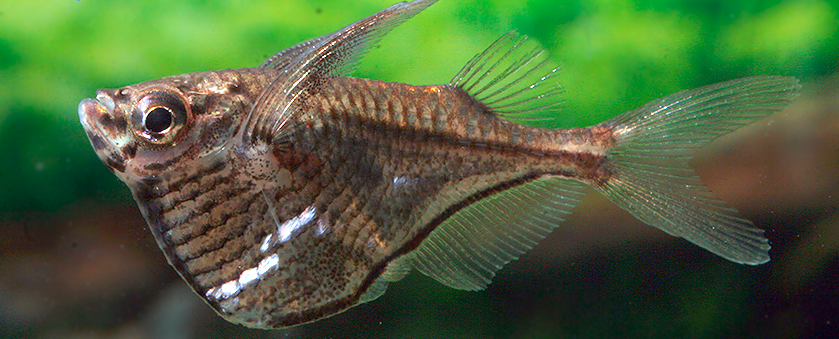
Image with text
Pair text with an image to focus on your chosen product, collection, or blog post. Add details on availability, style, or even provide a review.