

Aquapets ( KowloonAquarium)
Asian Blue Mudskipper (Periophthalmodon Septemradiatus)
Asian Blue Mudskipper (Periophthalmodon Septemradiatus)
Couldn't load pickup availability
Asian Blue Mudskipper — The Jewel-Toned Amphibious Wonder
Captivating, rare, and utterly unlike anything else in the hobby, the Asian Blue Mudskipper (Periophthalmodon septemradiatus) is one of the most striking and sought-after mudskipper species available. Distinguished from other mudskippers by its beautiful blue-tinted colouration and more slender, elegant body form, this species from the freshwater and brackish rivers of Southeast Asia is a true showpiece for the dedicated paludarium enthusiast.
Like all mudskippers, P. septemradiatus is a genuine amphibious fish — equally comfortable on land and in water, using its powerful pectoral fins to walk, skip, and even climb. With their large, independently mobile eyes and expressive personalities, Asian Blue Mudskippers are interactive, intelligent, and endlessly fascinating to observe.
Care at a Glance
- Common Name: Asian Blue Mudskipper, Seven-rayed Mudskipper
- Scientific Name: Periophthalmodon septemradiatus
- Origin: Southeast Asia (freshwater to brackish rivers, estuaries, and mangrove margins)
- Adult Size: Up to 10 cm (4 inches)
- pH: 7.0 – 8.0
- General Hardness (GH): 8 – 20
- Carbonate Hardness (KH): 2 – 3
- Temperature: 24 – 28°C (75 – 82°F)
- Nitrite (NO₂): 0 ppm — must be zero at all times
- Nitrate (NO₃): 15 ppm or lower
- Water Type: Freshwater to low-end brackish; more freshwater-tolerant than many mudskipper species
- Difficulty: Moderate to Advanced
⚠️ Important: Land Space & Habitat Requirements
Asian Blue Mudskippers have unique care requirements that are non-negotiable for their long-term health:
- Land access is essential: They are amphibious and must have access to a dry land area at all times. A paludarium or vivarium setup with a sloped substrate, mudflat, or elevated platform is required.
- Humidity: The land area must remain humid to allow cutaneous respiration (breathing through the skin). Mist the land area regularly.
- Escape-proofing: A tight-fitting, ventilated lid is absolutely essential — mudskippers are skilled climbers and will escape from open or loosely covered tanks.
Tank & Setup Tips
A paludarium with a shallow water section and a generous land area is the ideal setup. Use a sloped substrate (fine sand or mud mix) to create a natural mudflat gradient from water to land. Mangrove roots, smooth rocks, driftwood, and cork bark create a naturalistic environment that replicates their riverbank and estuarine habitat. Aim for a water depth of 5–10 cm in the aquatic zone.
Feeding
Carnivorous predators. Accept live and frozen meaty foods: bloodworms, crickets, small mealworms, earthworms, brine shrimp, and other small invertebrates. They strongly prefer to feed on land or at the water’s edge. With patience, hand-feeding is achievable and makes for a deeply rewarding keeper-fish relationship.
Compatible Tank Mates
Best kept as a species-only setup or with other mudskippers of similar size. They are territorial, particularly over land space — provide ample territory for each individual. Avoid housing with fully aquatic fish or invertebrates that cannot access land.
📸 Photos are for reference only. Actual fish may vary slightly in appearance — each one is uniquely characterful!
Materials
Materials
Shipping & Returns
Shipping & Returns
Dimensions
Dimensions
Care Instructions
Care Instructions

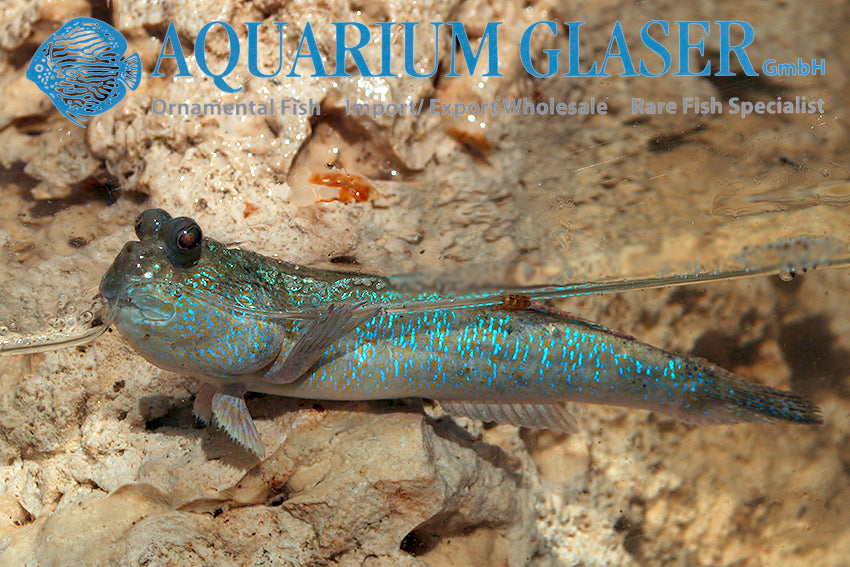
Image with text
Pair text with an image to focus on your chosen product, collection, or blog post. Add details on availability, style, or even provide a review.