
Aquapets ( KowloonAquarium)
Anubias nana sp. Stardust mini
Anubias nana sp. Stardust mini
Couldn't load pickup availability
Overview & Naming
-
Scientific Name: It's a cultivated variety of the genus Anubias, most likely a mutation or selection from Anubias barteri or Anubias nana.
-
Common Name: Anubias Stardust Mini, Anubias 'Stardust', Anubias Pangolino 'Stardust' (Note: "Pangolino" is sometimes used for super miniature varieties, but true "Pangolino" is different. The naming can be inconsistent in the trade).
-
Key Feature: Its leaves are covered in dense, pinprick-sized, creamy-white or yellow spots and splashes, resembling a starry sky—hence the name "Stardust."
Physical Characteristics
-
Size: True to its "Mini" name, it's a very small, slow-growing plant. Mature leaves are typically 1-2 inches (2.5-5 cm) long.
-
Leaf Shape: Leaves are broadly lanceolate or slightly heart-shaped, thick, and leathery, typical of Anubias.
-
Coloration: The hallmark is the intense variegation. The spots are not just on the surface but are part of the leaf tissue (not a disease or deficiency). The base color is a medium to dark green.
-
Growth Habit: It grows from a horizontal rhizome. Roots anchor it to hardscape (wood, rock), and new leaves emerge from the rhizome. It does not get planted in substrate.
Care Requirements (Easy to Moderate)
Anubias are famously hardy, and Stardust Mini is no exception, with one extra consideration due to its variegation.
-
Light: Low to Moderate is ideal. It can survive in low light, but moderate light helps enhance and maintain the bright variegation. Avoid very high-intensity light, which can promote algae growth on its slow-growing leaves.
-
CO2 & Fertilization: Not required, but will benefit from liquid fertilizers (especially a comprehensive macro/micro fertilizer). Added CO2 can speed up growth slightly, but it's unnecessary.
-
Water Parameters: Very adaptable. pH 6.0-7.5, Temperature 72-82°F (22-28°C). It tolerates a wide range of hardness.
-
Placement & Planting:
-
CRUCIAL: Do not bury the rhizome. Attach it to driftwood, lava rock, or other décor using super glue gel (cyanoacrylate) or cotton thread.
-
Its small size makes it perfect for the foreground, attached to small stones, or on branches in the midground of nano aquariums.
-
-
Growth Rate: Extremely slow. You might only see 1 new leaf per month. Patience is key.
Special Considerations & Challenges
-
Algae: The slow growth and variegated (less chlorophyll) leaves make it slightly more prone to algae (like BBA) than solid green Anubias. Good tank maintenance, adequate flow, and avoiding excessive light are preventative measures.
-
"Melt": When introduced to a new tank, it may lose an old leaf or two as it acclimates. This is normal. Ensure new growth is healthy.
-
Stability of Variegation: The variegation is generally stable, but in very low-light conditions, new leaves may come in less spotted. Increasing light slightly usually restores the pattern.
-
Propagation: Simply cut the rhizome with a sharp, clean knife. Ensure each division has at least 2-3 healthy leaves. Propagate only when the mother plant has a long rhizome (6+ leaves).
Comparison to Similar Plants
-
vs. Anubias Nana Petite: Nana Petite is uniformly green and slightly larger. Stardust Mini is its variegated, spotted counterpart.
-
vs. Anubias Pinto: 'Pinto' varieties have larger, marbled white patterns (often half-white leaves), while 'Stardust' has distinct, small spots.
-
vs. Anubias Pangolino: True Pangolino has tiny, narrow, solid green leaves (like a grass). The names are sometimes confused in the market.
Availability & Price
-
Rarity: It is a specialty, tissue-cultured plant and is not commonly found in big-box pet stores.
-
Source: Look for it in local aquarium specialty stores or from online retailers that carry advanced aquatic plants (e.g., BucePlant, Aquarium Plants Factory).
-
Price: It is significantly more expensive than common Anubias. Expect to pay $15 - $30 USD for a small potted or tissue culture cup with a single rhizome and a few leaves, due to its slow propagation and high demand.
In summary, Anubias Stardust Mini is a stunning, miniature, slow-growing epiphyte perfect for adding sparkling detail to the aquascape foreground. Its care is standard for Anubias, with extra attention needed to light for optimal variegation and algae prevention. Its beauty and rarity make it a prized centerpiece in nano and planted tanks.
Materials
Materials
Shipping & Returns
Shipping & Returns
Dimensions
Dimensions
Care Instructions
Care Instructions
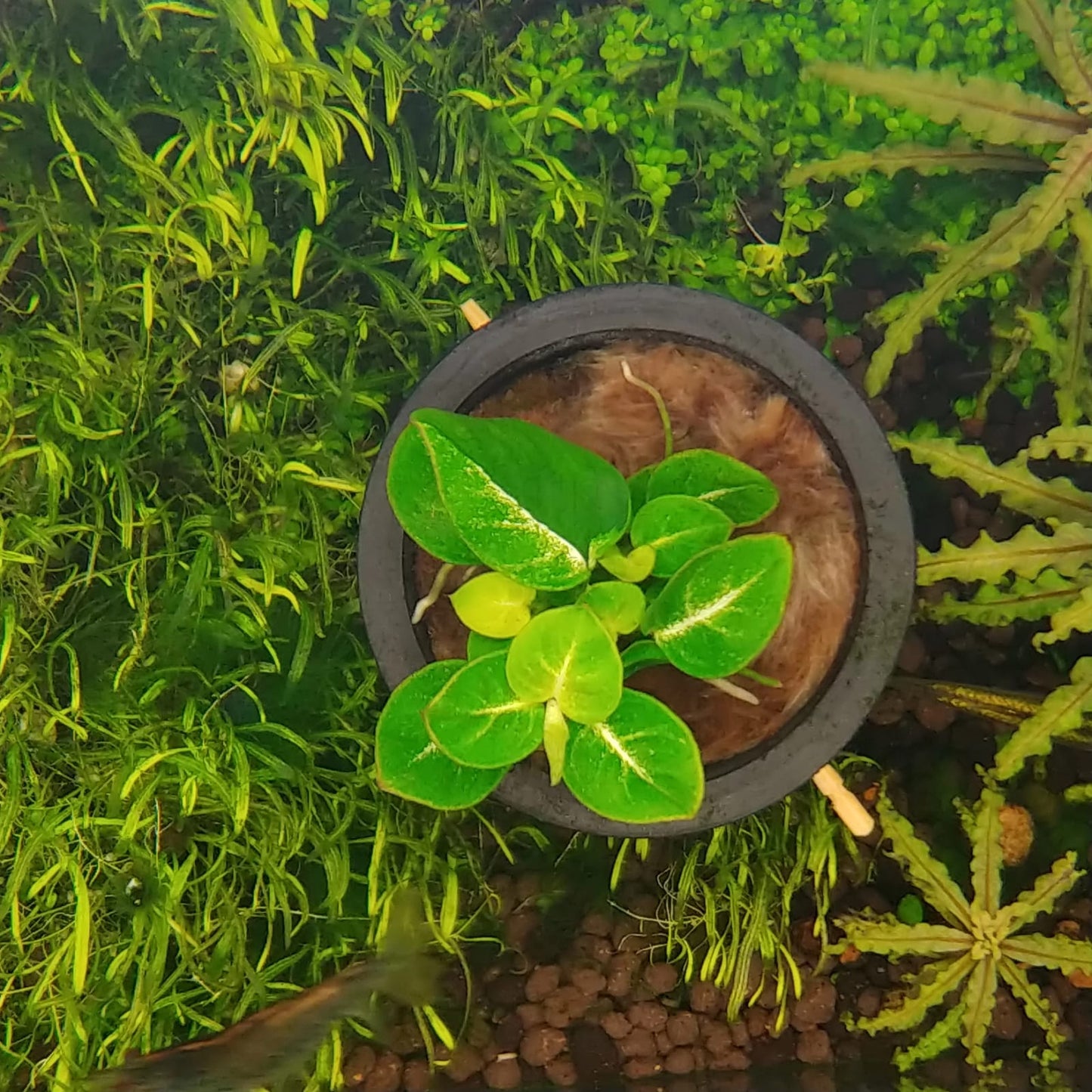
Image with text
Pair text with an image to focus on your chosen product, collection, or blog post. Add details on availability, style, or even provide a review.