
Aquapets ( KowloonAquarium)
Anubias barteri sp. Broad leaf
Anubias barteri sp. Broad leaf
Couldn't load pickup availability
Plant Overview
Anubias barteri sp. Broad Leaf is one of the most iconic and dependable plants in the freshwater aquarium hobby. Native to the tropical rivers and streams of West Africa, this robust rhizome plant is celebrated for its large, glossy, deep-green leaves and near-indestructible nature. It thrives in low-light conditions, making it an ideal choice for beginners and seasoned aquascapers alike.
Quick Reference
| Parameter | Value |
|---|---|
| Family | Araceae |
| Difficulty | Easy |
| Growth Rate | Slow |
| Placement | Midground / Background / Hardscape |
| Height | 15–40 cm |
| Propagation | Rhizome Division |
| Temperature | 22–28°C (72–82°F) |
| pH | 6.0–7.5 |
| Hardness | 2–25 dGH |
| CO2 | Not required |
| Lighting | Low – Medium |
Appearance
Anubias barteri sp. Broad Leaf produces large, broadly ovate leaves on sturdy petioles emerging from a thick, creeping rhizome. The leaves are a rich, dark green with a smooth, leathery texture and prominent veining — bold and architectural in character. Its slow growth means each leaf is long-lasting and resistant to algae when kept under appropriate lighting. Under good conditions, it may even produce small white spathe flowers submerged.
Care Guide
- Attachment: Do not bury the rhizome in substrate — this will cause it to rot. Attach to rocks or driftwood using thread or aquarium-safe glue, or leave it free on the substrate.
- Lighting: Prefers low to medium light. Avoid intense direct light, which promotes algae growth on the slow-growing leaves.
- CO2: Not required. This plant grows well in low-tech setups without CO2 injection.
- Nutrients: Benefits from occasional liquid fertilization, particularly with micronutrients. Root tabs near the rhizome can also support healthy growth.
- Maintenance: Remove any yellowing or damaged leaves at the base. Propagate by dividing the rhizome, ensuring each section has at least a few leaves.
Aquascaping Uses
- A classic choice for attaching to driftwood and rocks, creating a natural, jungle-like aesthetic.
- Excellent for low-tech and low-light aquariums where most stem plants would struggle.
- Its bold, broad leaves provide strong visual contrast against fine-leaved plants and mosses.
- Compatible with a wide range of fish and invertebrates, including cichlids, shrimp, and snails.
- Well-suited to Nature Aquarium, biotope, and community tank setups.
Materials
Materials
Shipping & Returns
Shipping & Returns
Dimensions
Dimensions
Care Instructions
Care Instructions
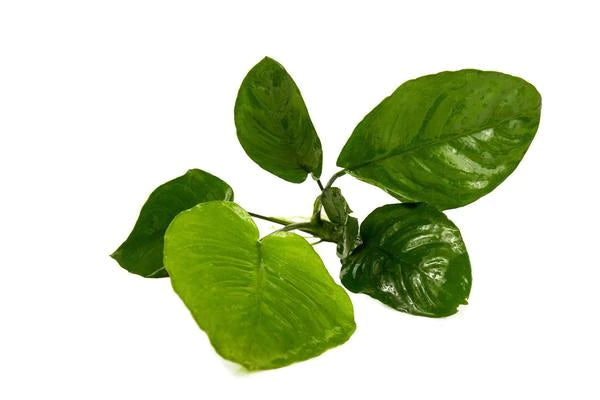
Image with text
Pair text with an image to focus on your chosen product, collection, or blog post. Add details on availability, style, or even provide a review.