
Aquapets ( KowloonAquarium)
Paradox Pipefish (Indostomus Paradoxus)
Paradox Pipefish (Indostomus Paradoxus)
Couldn't load pickup availability
Indostomus paradoxus is a tiny, cryptic, and highly specialised fish native to Southeast Asia. It is the type species of its genus and family, meaning it's the original example scientists use to define these groups. Its name, paradoxus, hints at the confusing and "paradoxical" taxonomic history it has presented to ichthyologists .
Taxonomy and Discovery
-
Scientific Name: Indostomus paradoxus Prashad & Mukerji, 1929
-
Family: Indostomidae (a monogeneric family, meaning it contains only one genus, Indostomus) .
-
Discovery: It was first discovered in the 1920s in Lake Indawgyi in Myanmar (then Burma) and formally described in 1929 .
-
Taxonomic History: Its classification has been a subject of debate. While originally placed with sticklebacks in the order Gasterosteiformes, modern scientific analysis often places it in the order Synbranchiformes, making it a relative of spiny eels and swamp eels. This long-standing uncertainty is a key part of its scientific interest .
Physical Characteristics
-
Size: It's a very small fish, reaching a maximum standard length of only 2.5 to 3.0 cm (about 1 inch) .
-
Appearance: It has an elongated, thin body that tapers towards a small, fan-shaped tail. Its most distinctive feature is its body, which is covered in tough, armour-like plates instead of typical fish scales .
-
Sexual Dimorphism:
-
Males: Have broad, elongated pelvic fins with the outer rays curved inwards. During the breeding season, they develop a lighter, more reddish overall colour and a light brown stripe in their dorsal and anal fins .
-
Females: Have straight, more slender pelvic fins and typically display a rounded abdomen when carrying eggs .
-
-
Distinguishing Feature: It can be distinguished from its close relatives (I. crocodilus and I. spinosus) by its lack of dark markings in the dorsal and anal fins (except for a breeding stripe in males) and its lightly serrated or smooth head bones .
Habitat and Distribution
-
Geographic Range: Its distribution is in mainland Southeast Asia, from northern Myanmar (specifically around Lake Indawgyi and the Ayeyarwady River basin) through to Cambodia .
-
Preferred Habitat: This species is a resident of slow-moving or stagnant freshwater environments. It thrives in canals, ditches, swamps, and ponds, particularly those with muddy or sandy bottoms. It is almost always found in association with dense aquatic vegetation, submerged roots, or leaf litter, which provides cover and hunting grounds .
🍽️ Diet and Behavior
-
Diet: It is a micropredator, feeding on very small, slow-moving benthic (bottom-dwelling) invertebrates. Its natural diet consists of tiny worms, insect larvae, and small crustaceans like copepods and daphnia .
-
Behavior: This is a sedentary and slow-moving fish that spends most of its time resting on the bottom or holding position among vegetation. It is not a strong swimmer and prefers habitats with little to no water flow .
Reproduction
The reproductive strategy of I. paradoxus is quite specialised .
-
Cave Spawner: It is a cave-spawning species. The male selects a small crevice or cave, such as inside hollow reeds, bamboo, or even small lengths of plastic piping, as a nesting site .
-
Courtship: The male performs a display with erect fins and quivering movements to attract a female to the entrance of his chosen cave.
-
Spawning: The female typically deposits a small clutch of 5 to 40 eggs on the roof of the cave, often while both fish are upside down .
-
Parental Care: After spawning, the male drives the female away and assumes sole responsibility for guarding and fanning the eggs until they hatch and the fry are free-swimming, a period of dedicated care .
Conservation and Human Interaction
-
Conservation Status: The IUCN Red List classifies Indostomus paradoxus as Least Concern (LC) . Its population is currently considered stable, and it faces no major widespread threats .
-
Interaction with Humans: It is of no interest to fisheries due to its tiny size and bony armour. However, it has a niche presence in the aquarium trade, where it is valued by enthusiasts for its unique appearance and fascinating breeding behaviour .
In the Aquarium
For advanced aquarium keepers, this species presents a unique challenge .
-
Tank Setup: They require a mature, well-planted tank with a soft substrate, driftwood, and leaf litter to replicate their natural habitat. Water flow should be very gentle.
-
Water Parameters: They are tropical fish, comfortable in a temperature range of 22-27°C and a pH around 6.5-7.1 .
-
Dietary Needs: They are notoriously difficult to feed, as they will almost always refuse prepared or frozen foods and must be offered small live foods like Artemia nauplii, daphnia, and microworms .
-
Tank Mates: They are best kept in a group of 4-6 individuals in a species-specific tank or with other very small, peaceful fish like Boraras or Dario species, as they are poor competitors for food and can be preyed upon by larger fish .
I hope this detailed information gives you a comprehensive picture of this remarkable little fish. Is there a particular aspect of its biology or care that you would like to know more about?
Materials
Materials
Shipping & Returns
Shipping & Returns
Dimensions
Dimensions
Care Instructions
Care Instructions
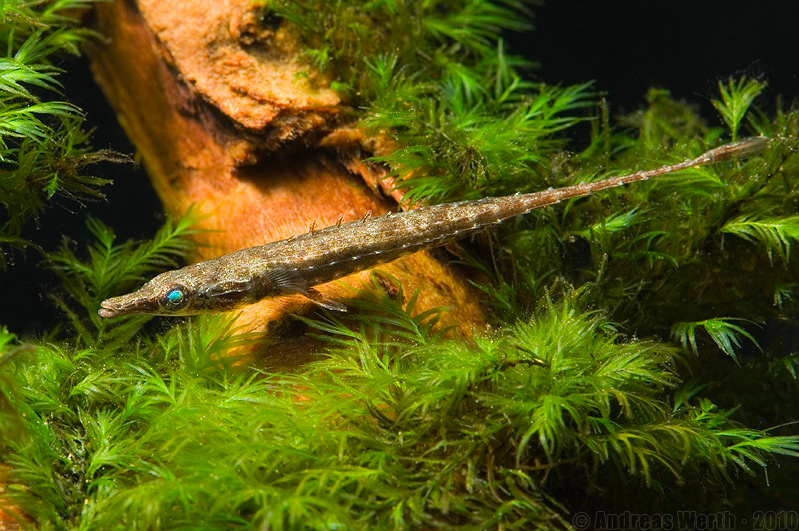
Image with text
Pair text with an image to focus on your chosen product, collection, or blog post. Add details on availability, style, or even provide a review.