
Aquapets ( KowloonAquarium)
Orange Mexican Dwarf Crayfish
Orange Mexican Dwarf Crayfish
Couldn't load pickup availability
Orange Mexican Dwarf Crayfish — A Tiny, Vibrant Crustacean with Big Personality
Compact, colourful, and endlessly entertaining, the Orange Mexican Dwarf Crayfish (Cambarellus patzcuarensis var. "Orange") is one of the most popular and beginner-friendly dwarf crayfish in the freshwater hobby. With its vivid orange colouration and miniature lobster-like form, this little crustacean brings a burst of colour and lively personality to any aquarium — without the destructive tendencies of larger crayfish species.
Unlike their larger cousins, Orange CPO (as they’re affectionately known) are peaceful enough to be kept in community tanks, are largely plant-safe, and are small enough to thrive in nano aquariums. Watch them forage, explore, and interact with their environment with curious, deliberate movements that make them a joy to observe.
Care at a Glance
- Common Name: Orange Mexican Dwarf Crayfish, CPO Crayfish
- Scientific Name: Cambarellus patzcuarensis var. "Orange"
- Origin: Mexico (Lake Pátzcuaro basin); selectively bred for orange colouration
- Adult Size: Up to 4 cm (1.6 inches) — a true dwarf species
- pH: 7.0 – 8.0
- Temperature: 18 – 24°C (64 – 75°F) — cooler water preferred
- Temperament: Peaceful; generally safe with most community fish and shrimp
- Difficulty: Beginner – Easy
- Shrimp Safe: Generally yes, though may occasionally chase shrimp
Tank & Setup Tips
Orange CPO thrive in a well-established aquarium of at least 10 gallons, with plenty of hiding spots — caves, driftwood, PVC pipes, and dense planting all work well. They are natural explorers and will investigate every corner of their tank. A soft to medium substrate is preferred, and they appreciate having multiple sheltered areas to retreat to, especially during moulting.
They prefer slightly harder, alkaline water — unlike many tropical invertebrates. Avoid copper-based medications, which are lethal to all crustaceans. A tight-fitting lid is recommended as they can climb and occasionally escape.
Feeding
Omnivorous scavengers. Accept a wide variety of foods including sinking pellets, algae wafers, blanched vegetables (zucchini, spinach, cucumber), frozen bloodworms, and brine shrimp. They will also graze on algae and biofilm. Feed every 1–2 days, removing uneaten food promptly to maintain water quality.
Compatible Tank Mates
One of the most community-friendly crayfish available. Suitable tank mates include small to medium peaceful fish (tetras, rasboras, corydoras, small gouramis), larger shrimp species (Amano, bamboo shrimp), and snails. Use caution with very small nano shrimp (Neocaridina, Caridina) as they may occasionally be chased or predated.
Moulting
Orange CPO moult periodically as they grow. During and after moulting they are soft and vulnerable — provide plenty of hiding spots and avoid disturbing them. Do not remove the shed exoskeleton; the crayfish will consume it to reclaim valuable minerals including calcium.
Breeding
Breed readily in captivity. Females carry eggs under their tail until hatching, releasing miniature fully-formed juveniles. No larval stage — fry are immediately independent and can be raised on the same foods as adults. A rewarding and prolific species to breed.
📸 Photos are for reference only. Actual colouration may vary slightly — each one is uniquely beautiful!
Materials
Materials
Shipping & Returns
Shipping & Returns
Dimensions
Dimensions
Care Instructions
Care Instructions
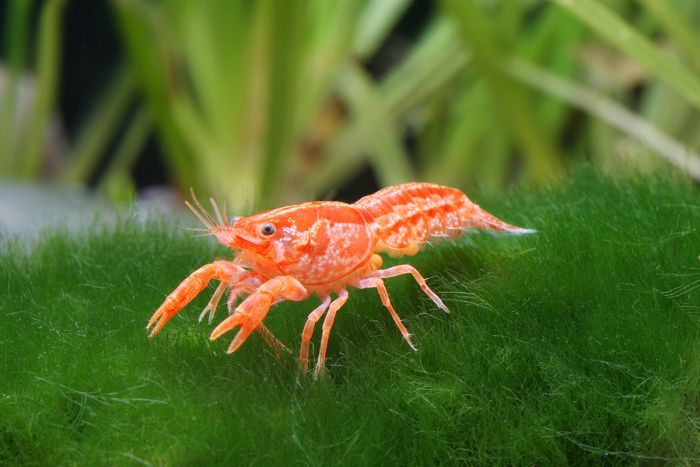
Image with text
Pair text with an image to focus on your chosen product, collection, or blog post. Add details on availability, style, or even provide a review.