
Aquapets ( KowloonAquarium)
Orange Amano Shrimp (Caridina multidentata)
Orange Amano Shrimp (Caridina multidentata)
Couldn't load pickup availability
The Orange Amano Shrimp (Caridina multidentata "Orange") is a selectively bred color variant of the popular Amano shrimp, prized for its vibrant appearance and superior algae-eating abilities . While it shares the hardy and peaceful nature of its wild counterpart, it adds a striking splash of warm color to the aquarium .
Quick Facts at a Glance
Appearance
The Orange Amano Shrimp has a translucent body with a solid, vibrant orange to reddish-orange coloration . This distinct color is the result of selective breeding from the wild-type, which is semi-transparent with grey-brown spots .
There is a key detail to note about their color: they can appear pale or even similar to the wild form when stressed or immediately after being introduced to a new tank . Their full color returns once they are settled and comfortable in their environment .
Ideal Water Parameters
Providing stable water conditions is crucial for their health, especially during molting .
| Parameter | Ideal Range |
|---|---|
| Temperature | 18-28°C (64-82°F); optimal is 22-26°C (72-79°F) |
| pH | 6.5 - 7.5 |
| General Hardness (GH) | 5 - 12 °dGH |
| Carbonate Hardness (KH) | 2 - 10 °dKH |
These shrimp are sensitive to copper, which is toxic to them, so any medications or fertilizers containing copper should be avoided . Clean water with very low ammonia and nitrite is essential .
Tank Setup and Care
To keep Orange Amano Shrimp successfully, the aquarium should be at least 30-50 liters (8-13 gallons), with a minimum length of 60cm (24 inches) to provide adequate swimming and grazing space . They are known to be excellent climbers, so a tight-fitting lid or cover is highly recommended to prevent escapes .
The setup should include plenty of live plants like Java Moss, Anubias, and driftwood or rocks . These provide essential hiding spots, especially after molting when they are vulnerable, and also serve as a natural surface for grazing on biofilm .
A good filtration system with a moderate flow is ideal, but the intake should be covered with a pre-filter sponge to prevent young or small shrimp from being sucked in .
🍽️ Diet and Feeding
As omnivores, Orange Amano Shrimp are natural scavengers and are highly effective at eating various types of algae, including green hair algae and diatoms . Their diet should be supplemented with:
-
Blanched vegetables like spinach, zucchini, or nettle leaves
-
Occasional protein-rich foods such as artemia or daphnia once or twice a week
Tank Mates
They are completely peaceful and make excellent additions to community tanks. Ideal tank mates include small, non-aggressive fish like tetras, rasboras, and corydoras, as well as other peaceful shrimp species like Neocaridina (Cherry Shrimp) and snails .
Avoid housing them with large or aggressive fish such as cichlids or puffers that may prey on them .
Sexing and Breeding
Breeding Orange Amano Shrimp is considerably more challenging than breeding other popular aquarium shrimp .
-
Sexing: Females are generally larger and have a broader, more rounded abdomen for carrying eggs, while males are smaller and slenderer .
-
Reproduction: The female carries hundreds of tiny eggs until they hatch into free-swimming larvae .
-
The Challenge: Unlike Neocaridina shrimp, the larvae cannot survive in freshwater. They must be transferred to brackish water (salinity around 15-20 ppt) within a few days of hatching to develop through several larval stages . After several weeks, the juvenile shrimp can then be slowly acclimated back to freshwater. This process is complex and requires dedicated effort, making successful home breeding rare .
Did You Know?
The Orange Amano Shrimp is one of several new color morphs of Caridina multidentata that have recently emerged in the aquarium trade through selective breeding. Others include the "Snow" (white) and "Lemon Yellow" varieties, offering aquarists a range of functional and colorful choices for their cleanup crew .
Materials
Materials
Shipping & Returns
Shipping & Returns
Dimensions
Dimensions
Care Instructions
Care Instructions
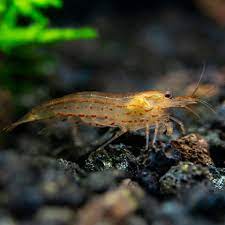
Image with text
Pair text with an image to focus on your chosen product, collection, or blog post. Add details on availability, style, or even provide a review.