
Aquapets ( KowloonAquarium)
Blue Velvet Shrimp (Neocaridina Davidi)
Blue Velvet Shrimp (Neocaridina Davidi)
Couldn't load pickup availability
Blue Velvet Shrimp (Neocaridina davidi "Blue Velvet") are a stunning and beginner-friendly freshwater shrimp, known for their vibrant blue color and efficient cleaning habits. They are a selectively bred color morph of the same species as the popular Red Cherry Shrimp.
Below is a comprehensive guide to their care and characteristics.
At a Glance: Key Facts
Tank Setup and Water Parameters
Creating a stable environment is key to their health and color.
-
Tank Size: A 5-gallon tank is the minimum for a small colony, but a 10-gallon tank is recommended as it maintains more stable water parameters and allows the colony to grow.
-
Water Parameters:
-
Filtration: A sponge filter is the best choice. It provides gentle flow, excellent biological filtration, and is safe for baby shrimp. If using another filter type, cover the intake with a pre-filter sponge.
-
Aquascaping: Live plants are essential. Java moss is excellent for providing cover for baby shrimp. Other good choices are Anubias, Java fern, and floating plants. Add driftwood, cholla wood, or small caves to provide hiding spots and surfaces for biofilm to grow.
Diet and Feeding
Blue Velvet Shrimp are natural scavengers and spend most of their day grazing on biofilm and algae.
-
Staple Diet: In a well-established tank, they will find much of their own food.
-
Supplemental Feeding: Offer a small amount of high-quality shrimp food, algae wafers, or blanched vegetables (like zucchini or spinach) once a day or every other day.
-
Important: Overfeeding is a common cause of death. Only give them what they can eat in 2-3 hours and remove any uneaten food.
Tank Mates and Compatibility
Due to their small size and peaceful nature, choosing tank mates carefully is crucial.
-
Safe Companions: Other peaceful dwarf shrimp (like Cherry or Amano shrimp), small snails (Nerite, Mystery), and tiny, non-aggressive fish such as Otocinclus catfish, Chili Rasboras, and Ember Tetras.
-
Avoid: Any fish large enough to eat them, including bettas, cichlids, gouramis, goldfish, and large barbs. Keeping them in a species-only tank is the best way to ensure their population thrives.
Breeding and Color Grades
One of the most rewarding aspects of keeping these shrimp is how easily they breed.
-
Breeding: They are prolific breeders. Females (which are larger and more colorful than males) will carry 20-50 eggs under their tail for about 30 days. The eggs hatch into tiny, fully formed versions of the adults that can fend for themselves immediately.
-
Color Grades: Their blue color is graded, which affects their price and appearance.
Critical Care Note: Copper is Toxic
Copper is lethal to all dwarf shrimp, including Blue Velvets. Before adding anything to your tank, always check the labels. This includes fish medications, plant fertilizers, and even some fish foods. Look for products specifically labeled "invertebrate-safe".
Materials
Materials
Shipping & Returns
Shipping & Returns
Dimensions
Dimensions
Care Instructions
Care Instructions
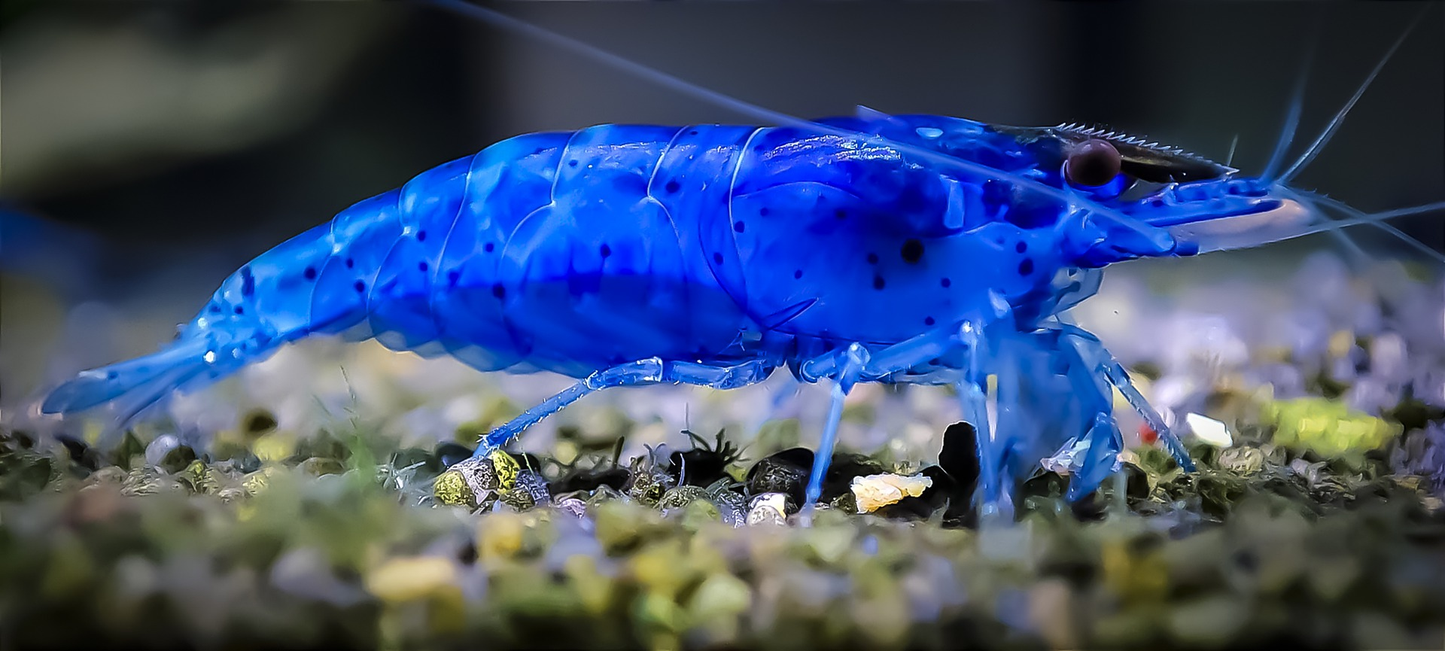
Image with text
Pair text with an image to focus on your chosen product, collection, or blog post. Add details on availability, style, or even provide a review.