
Aquapets ( KowloonAquarium)
Fittonia Albivenis
Fittonia Albivenis
Couldn't load pickup availability
Overview and Description
Fittonia albivenis is a species of evergreen perennial plant celebrated for its striking, veined foliage . Native to the tropical rainforests of South America (Colombia, Peru, Bolivia, Ecuador, and Brazil), it thrives on the forest floor .
Its most distinctive feature is its dark green, ovate leaves (typically 7-10 cm long) which are dramatically accented with a network of veins that can be white, pink, or red . The plant has a low-growing, creeping habit, usually reaching only 3-8 inches (about 10-20 cm) in height but spreading slowly over time . It produces small, insignificant, creamy-white flowers on spikes, but it is grown almost exclusively for its colorful foliage .
Its common names—nerve plant and mosaic plant—are direct references to the intricate, vein-like pattern on its leaves .
The genus name Fittonia honors two Irish sisters, Elizabeth and Sarah Mary Fitton, who authored a book on botany in 1817 . The species name albivenis comes from Latin, meaning "with white veins," which describes the original species form .
Cultivation and Care as a Houseplant
In temperate regions, Fittonia albivenis is a popular and rewarding, though somewhat "dramatic," houseplant. It requires conditions that mimic its humid rainforest home. Here are the key care guidelines:
-
Light: Thrives in bright, indirect light. An east- or north-facing window is ideal . Direct sunlight will scorch the leaves, while too little light causes leggy growth and loss of vibrant leaf color .
-
Water: Consistency is crucial. Keep the soil consistently moist but not waterlogged . It's famous for its dramatic "fainting" act: if it gets too dry, it will wilt and collapse dramatically, but it usually revives quickly after a good watering .
-
Humidity: Prefers high humidity (50% or more), which can be provided by misting, using a pebble tray, or placing it in a naturally humid room like a bathroom . Dry air can cause leaf browning or withering .
-
Temperature: Enjoys warm conditions, ideally between 60-85°F (15-29°C) . It is not cold-hardy and should be protected from drafts and temperatures below 55°F (13°C) .
-
Soil & Pot: A well-draining, peat-based potting mix is ideal . Because of its shallow roots, it performs well in shallow containers or dish gardens .
-
Maintenance: Pinch back stem tips to encourage a bushier, fuller appearance. Many growers also pinch off the flower spikes to direct the plant's energy into producing more foliage . It is slow-growing and only needs repotting every 2-3 years .
-
Propagation: Easily propagated from stem cuttings placed in water or moist soil .
Notable Varieties and Cultivars
Through selective breeding, Fittonia albivenis has given rise to numerous cultivars, which are generally grouped by vein color .
Potential Issues and Pests
This plant will let you know when it's unhappy. Yellowing leaves usually signal overwatering, while brown, crispy leaf edges point to low humidity or too much direct sun . A leggy, stretched-out appearance indicates a need for more light .
It can be susceptible to common houseplant pests like mealybugs, spider mites, scale, and aphids, so regular inspection is beneficial .
Uses and Interesting Facts
-
Landscape Use: In its native habitat or warm, frost-free climates (USDA Zones 11-12), it can be used as a colorful, shade-loving ground cover . Its compact size makes it a classic terrarium plant .
-
Traditional Uses: Indigenous tribes in the Amazon, such as the Kofan and Secoya, have traditionally used Fittonia albivenis for various purposes. It has been used to make a tea for treating headaches and muscular pain .
-
Pet Friendly: A major plus for pet owners is that nerve plants are non-toxic to cats and dogs .
Materials
Materials
Shipping & Returns
Shipping & Returns
Dimensions
Dimensions
Care Instructions
Care Instructions
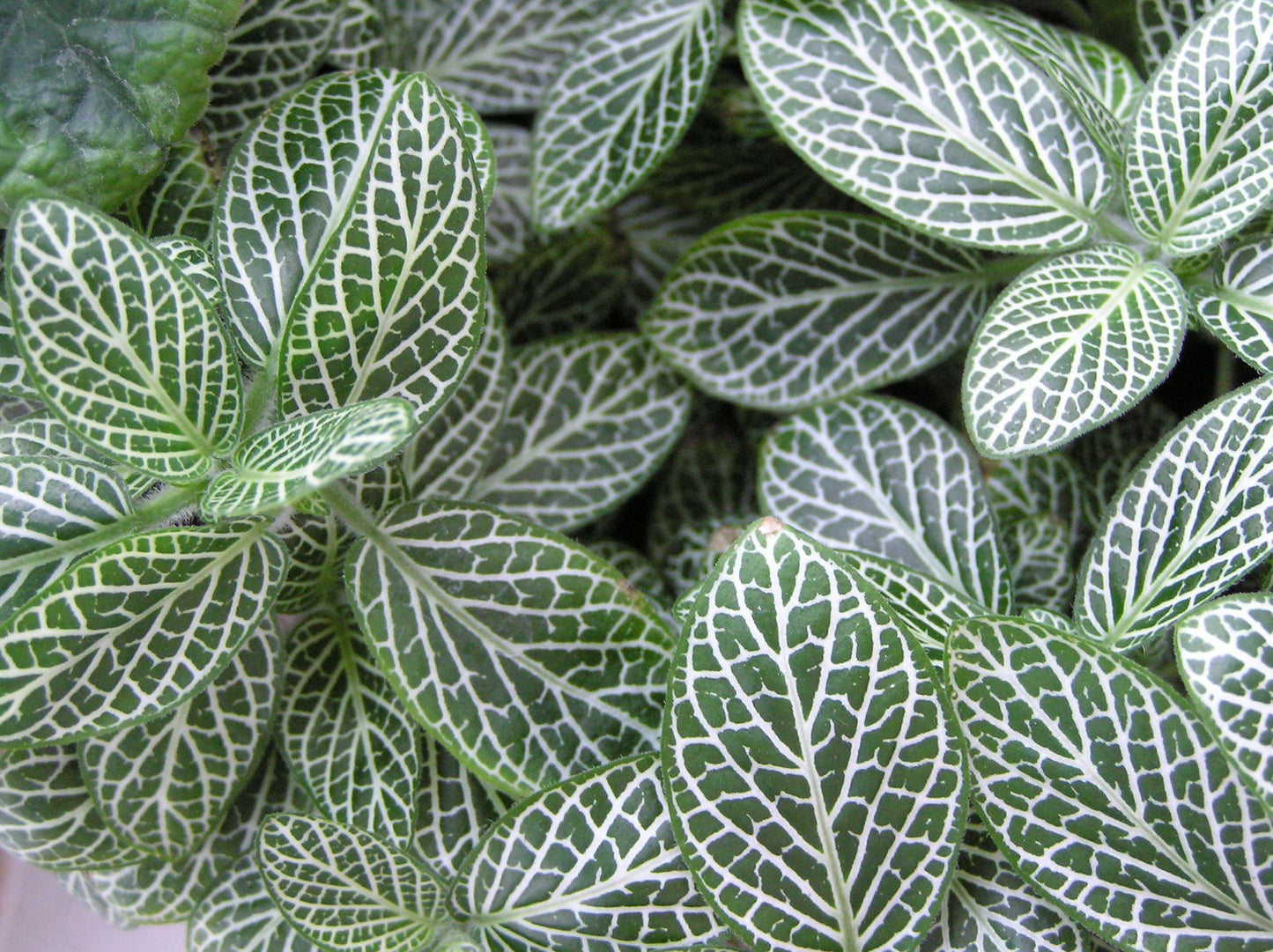
Image with text
Pair text with an image to focus on your chosen product, collection, or blog post. Add details on availability, style, or even provide a review.