
Aquapets ( KowloonAquarium)
Amano Shrimp (Caridina multidentata)
Amano Shrimp (Caridina multidentata)
Couldn't load pickup availability
The Amano Shrimp (Caridina multidentata), also known as the Yamato or Japanese Algae Shrimp, is a highly popular freshwater aquarium species prized for its exceptional algae-eating abilities. First introduced to the aquarium world by the legendary aquascaper Takashi Amano in the 1980s, it has become a staple "clean-up crew" member for planted tanks .
Here are the key details about this species:
Quick Overview
Natural Habitat and Appearance
In the wild, Amano shrimp are found in freshwater streams and marshes in Japan and Taiwan. They have a unique life cycle where adults live in freshwater, but their larvae are washed downstream to brackish or marine waters to develop .
They have a translucent, greyish-green body with a distinctive broken line of reddish-brown spots running along their sides. A white stripe often runs down their back from head to tail . Females are generally larger and have a more elongated lower row of dots, which makes them easy to distinguish from males .
Aquarium Care Guide
Amano shrimp are hardy, but maintaining stable water conditions is key to their health and longevity. They are particularly sensitive to copper, which is toxic to them .
-
Tank Size: A minimum of 10 gallons is recommended for a small group .
-
Water Parameters:
-
Tank Setup: Provide plenty of hiding places with plants (like Java Moss), driftwood, and rocks. A secure lid is essential as they are known to be escape artists . A gentle sponge or hang-on-back filter is ideal .
-
Diet: They are omnivores and voracious algae eaters, consuming types like green spot and hair algae . However, they cannot live on algae alone. Supplement their diet with algae wafers, shrimp pellets, blanched vegetables (zucchini, spinach), and occasional protein sources (bloodworms, daphnia) 2-3 times a week .
-
Tank Mates: They are peaceful and do well with small, non-aggressive fish like tetras, rasboras, and corydoras. Avoid keeping them with large cichlids, goldfish, or aggressive fish like some bettas .
Molting and Behavior
Amano shrimp will regularly molt (shed their exoskeleton) as they grow. You should leave the old, clear shell in the tank, as the shrimp will eat it to reabsorb valuable calcium . They are constantly active, grazing on surfaces for food and are more confident when kept in groups .
Breeding: A Notable Challenge
Breeding Amano shrimp at home is very difficult and rarely successful without intervention . While females will carry eggs in freshwater, the larvae require brackish (salty) water to survive. The eggs hatch into free-swimming larvae, not miniature versions of the adults. To raise them, you would need to move the larvae to a separate tank with saltwater and then gradually acclimate them back to freshwater after several weeks, a process too complex for most hobbyists . As a result, almost all Amano shrimp in the pet trade are wild-caught .
Materials
Materials
Shipping & Returns
Shipping & Returns
Dimensions
Dimensions
Care Instructions
Care Instructions
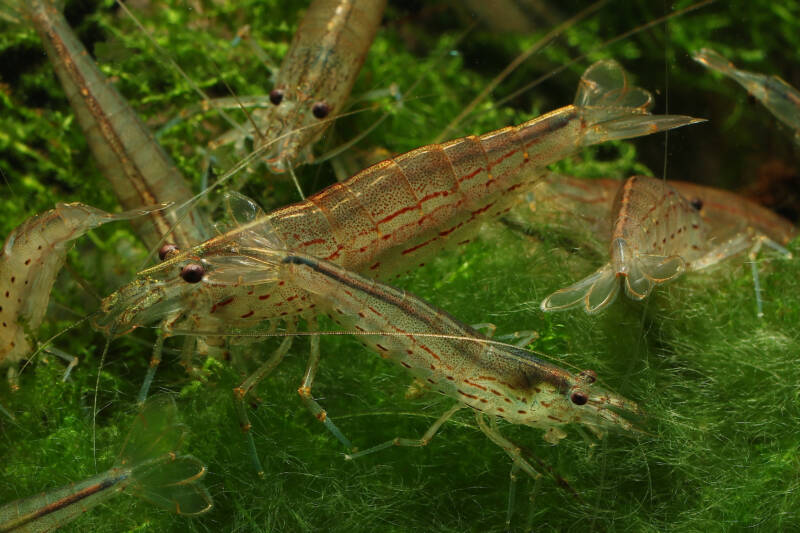
Image with text
Pair text with an image to focus on your chosen product, collection, or blog post. Add details on availability, style, or even provide a review.